You don’t have a cleaning problem. You have a visibility problem.
If you can’t measure airborne risk, you can’t prove compliance.

OSHA food safety: Is your facility air compliant?
Airborne particles threaten OSHA food safety and daily operations. Get your airborne risk score and uncover your biggest airborne contamination risks in under 3 minutes.
Airborne particles threaten OSHA food safety and daily operations. Get your airborne risk score and uncover your biggest airborne contamination risks in under 3 minutes.
OSHA food safety: Why clean doesn’t mean compliant
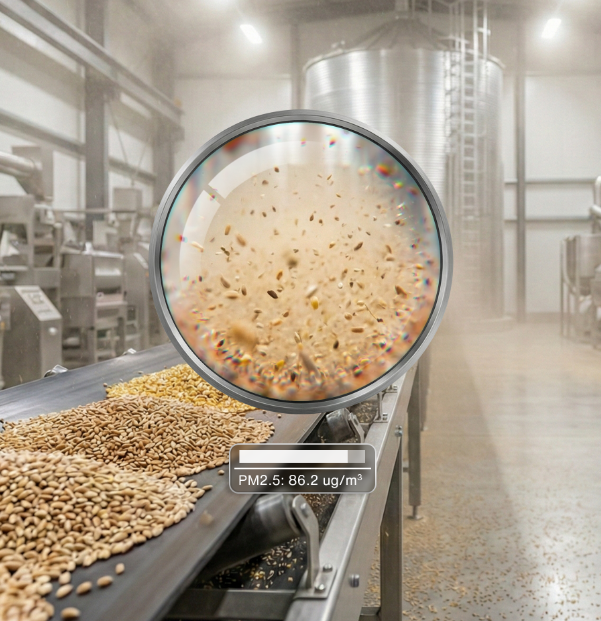
Most food safety measures focus on what’s visible. But airborne particles don’t stay in one place – they move.
They travel across production zones, shared airspaces, and packaging areas, often unnoticed.
OSHA food safety requirements increasingly expect facilities to demonstrate control of environmental risks, including airborne particles.
That’s why facilities can appear clean – and still fall short of compliance.
What looks controlled on the surface can still carry hidden risk in the air.
OSHA food safety: Why clean doesn’t mean compliant
What your OSHA food safety risk assessment will reveal
A clear understanding of how airborne risk impacts your food safety measures, compliance, and operational performance.
Airborne exposure and contamination pathways
Where particles originate, how they move across zones, and where they come into contact with products, across your full environment.
Compliance with OSHA food safety requirements
Whether airborne risks are addressed within your current food safety measures – or remain a critical blind spot during audits.
Operational, workforce, and business impact
How airborne dust affects cleaning effort, downtime, employee exposure, and overall risk to your operation, including pressure on teams and processes
A practical approach to OSHA food safety evaluation
Taking the risk assessment is as easy as 1, 2, 3
- Answer a few targeted questions about your facility in under 3 minutes
- We evaluate airborne risk across compliance,operations, and food safety requirements
- You receive a clear risk score with practical next steps
After completing the assessment, you will clearly understand:
- Your current airborne risk level
- Where compliance gaps exist within your food safety measures
- What actions are needed to improve control, including where clean air systems may be required
A practical approach to OSHA food safety evaluation

Does OSHA food safety require controlling airborne particles?
OSHA food safety requirements increasingly go beyond visible hygiene to include environmental risks that affect worker safety and product integrity.
While airborne dust is not always explicitly named, facilities are expected to identify and control risks that could impact compliance.
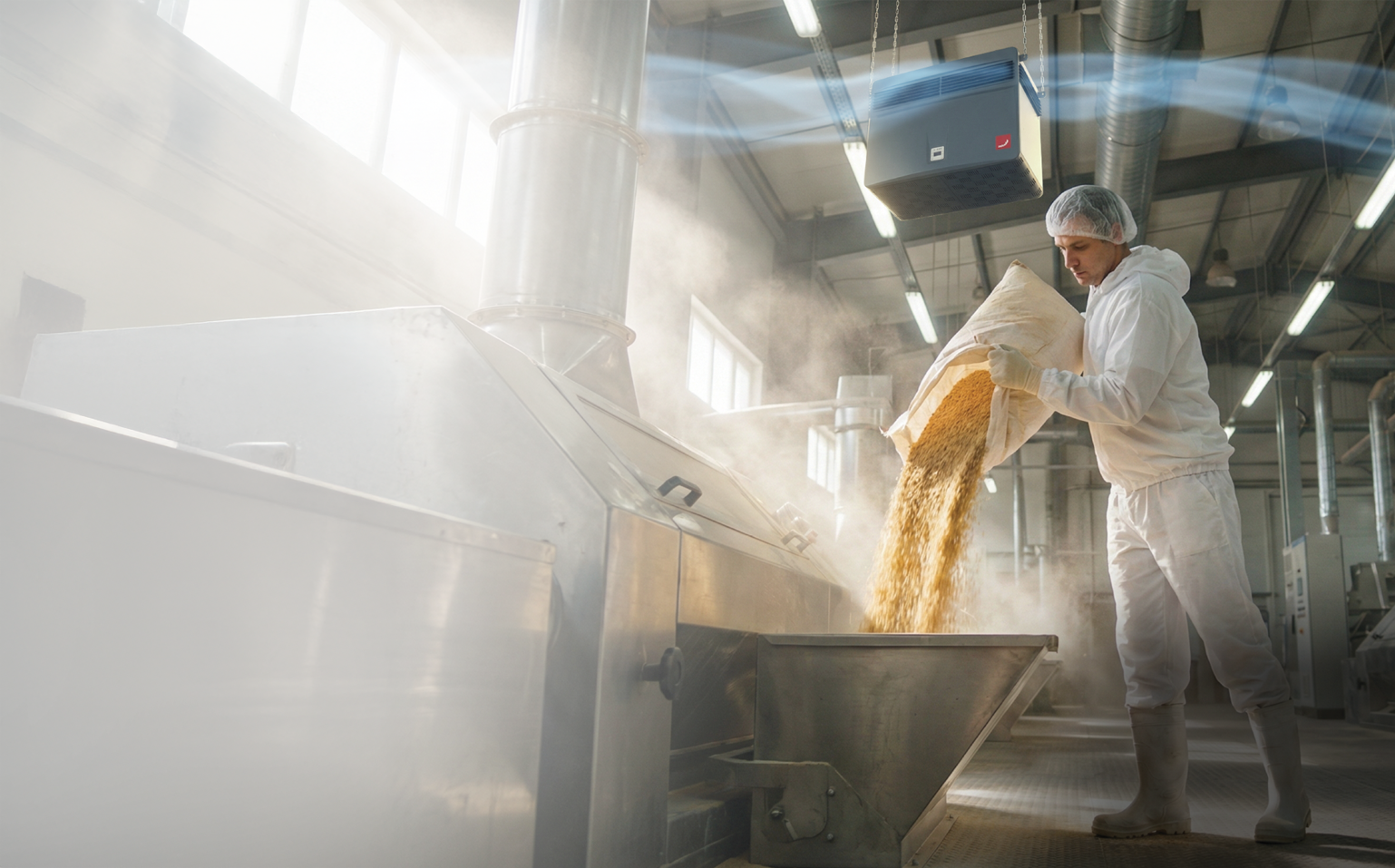
Airborne particles can carry contaminants, move between zones and affect both food safety measures and employee exposure. Without understanding and controlling this risk, facilities may struggle to demonstrate compliance during audits.
Why is it important to assess airborne risk in food production facilities?
Airborne risk is often underestimated because it isn’t visible. However, particles continuously move through shared airspaces, impacting products, processes, and people.
An assessment provides clarity on where exposure occurs, how it affects your OSHA food safety measures, and whether your current clean air systems are sufficient. This is essential to meet evolving OSHA food safety requirements and maintain confidence in your compliance.