Metal work safety goes beyond extraction. This guide explains why.
You made it: Your guide awaits
An important step towards cleaner air in your workplace. Congratulations! Please check your inbox for your free guide, don't forget to check your spam folder too. We hope you get plenty of clean air eureka moments whilst reading!
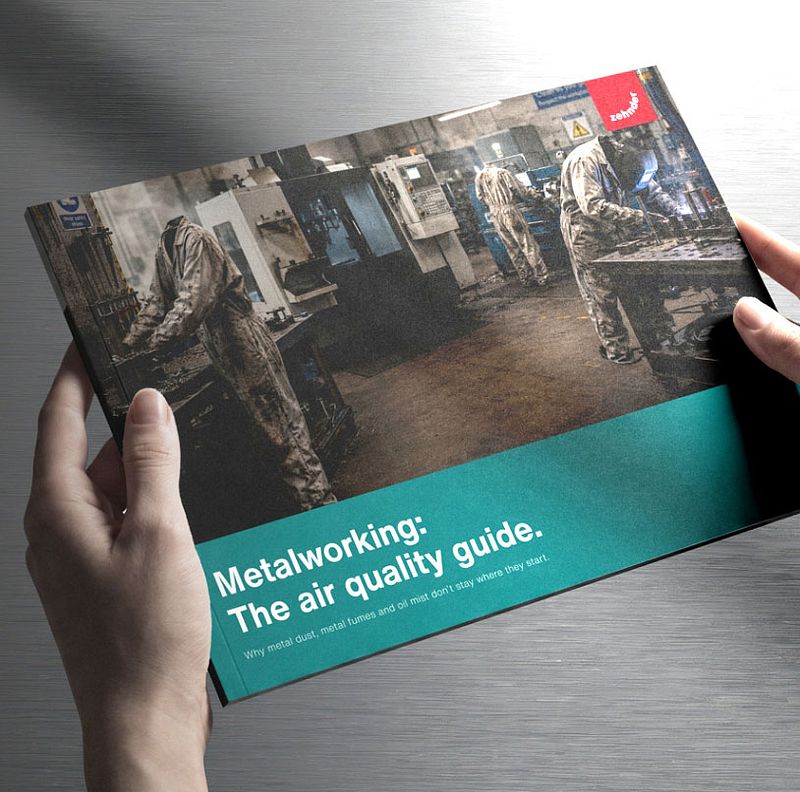
This guide reveals how shared air means shared exposure, impacting production health and safety.
Whether your facility welds, cuts, grinds, machines or finishes metal, airborne contamination may travel further than expected.
This guide looks beyond it. Inside you'll discover:
- How welding, grinding, cutting and CNC machining all affect the air shared across your facility
- Why LEV (local exhaust ventilation) and PPE don't control every airborne particle
- How contamination reaches walkways, maintenance areas, offices and welfare spaces
- The warning signs that suggest particles are already moving through your facility
- How air quality monitoring reveals risks that routine inspections can miss
- Practical steps to strengthen metal fabrication safety across the wider workplace
Whether you're responsible for operations, engineering, EHS or workplace safety, this guide provides practical insight into one of the most overlooked risks in modern manufacturing.
This guide reveals how shared air means shared exposure, impacting production health and safety.
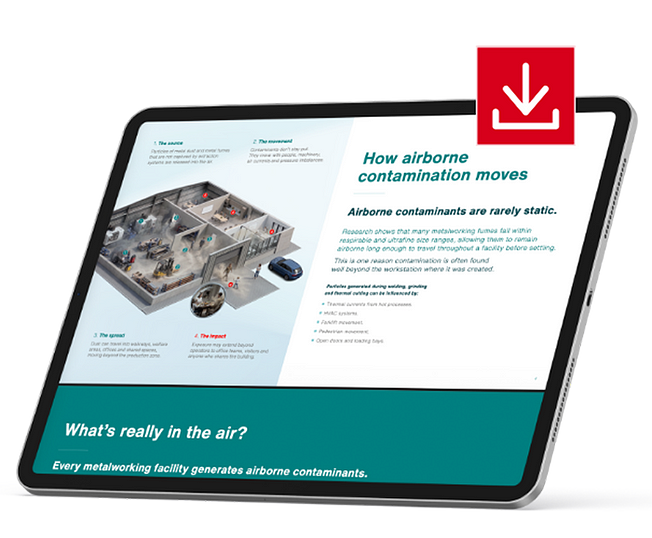
Metal work safety protects everyone who shares the air.
Metal work safety isn't just about the people at the machine. Once airborne, fine metal particles move beyond the workstation, through shared spaces and walkways, potentially exposing everyone who shares the same air. Exposure can occur in production areas, walkways, maintence zones, stores, offices and welfare spaces.
This affects:
Welders & machine operators
Forklift drivers & supervisors
Maintenance & cleaning teams
Visitors & customers
Office staff
Quality & inspection staff
Why does this matter?
Welding fumes are classified by the IARC as a Group 1 carcinogen, the highest classification available. That alone should give any metalworking facility pause.
But welding is only one contributor to the air on a shop floor. Grinding, cutting, finishing and CNC machining all add their own metal dust, fine particles and oil mist to the same shared air.
The evidence on welding is simply the most documented. It doesn't mean the others are safe by comparison, it means they're understudied.
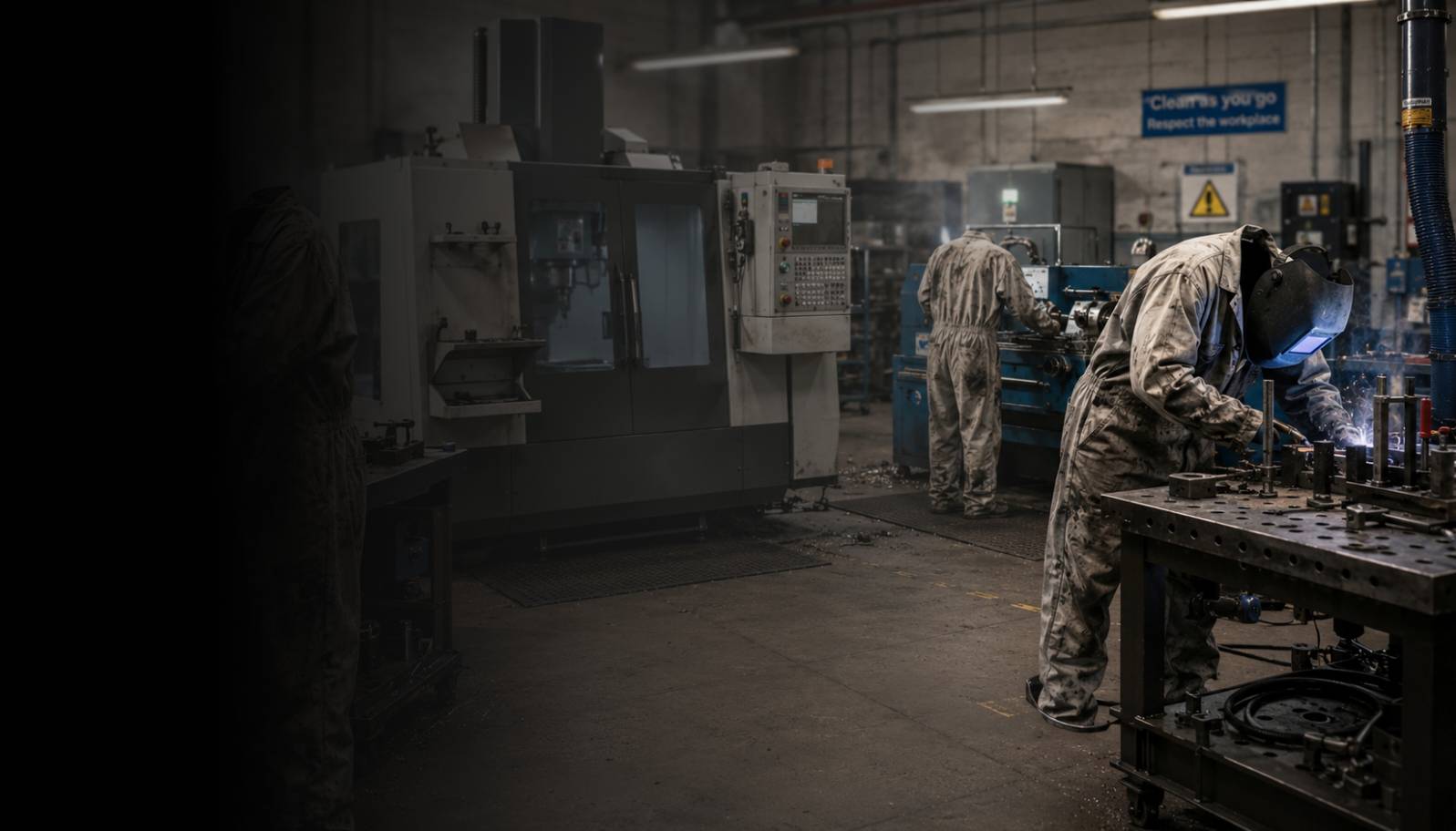
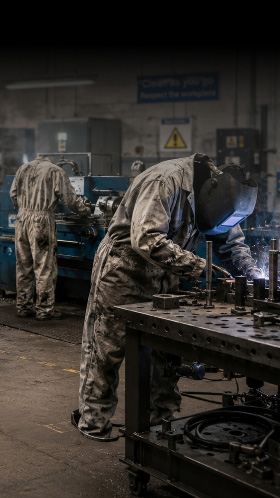
Metal work safety starts with particles, smaller than you think.
Many airborne particles generated during metalworking are invisible to the naked eye. Some are PM10. Others are PM2.5, around 30 times smaller than a human hair, allowing them to stay airborne long after the work is done.
Clean doesn't always mean clean air. Facilities that get this right see it show up everywhere – fewer hours spent cleaning before visitors and audits, less strain on maintenance, and a workplace people are genuinely proud to show.
Understanding what's really travelling through your facility matters, for your people, your processes and your production.
Metal fabrication safety becomes vulnerable when airborne risk is uncontrolled.
LEV, PPE and process controls remain essential to metal work safety. But airflow, movement and equipment positioning can still let particles escape into the wider facility.
The guide explains how air quality monitoring reveals where contamination travels, when particle levels rise, and whether your current controls are protecting production health and safety across the whole workplace, not just at the source.
Download the guide to see what your setup might be missing.
Metal fabrication safety becomes vulnerable when airborne risk is uncontrolled.
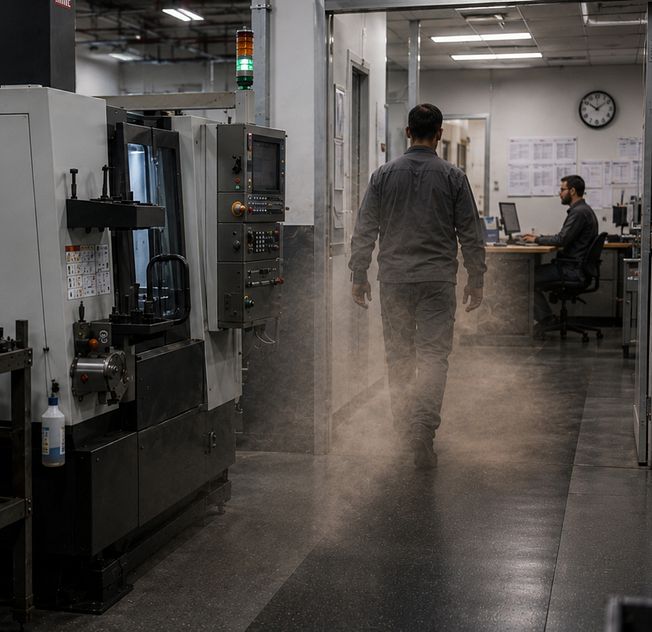
See how cleaner air transformed one metalworking facility.
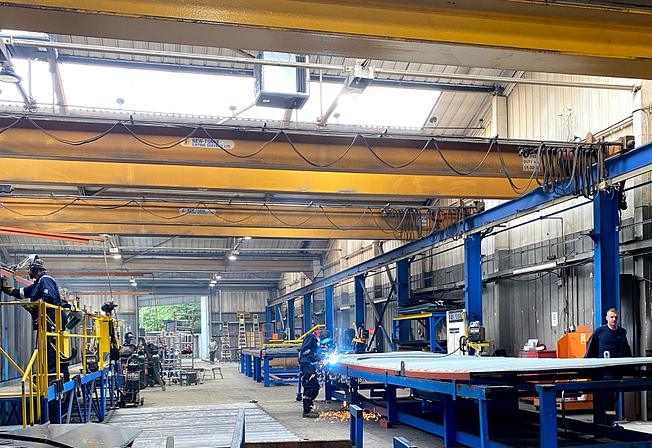
Cleaner air delivered more than healthier working conditions at Stackright UK Ltd. It helped improve productivity, workplace presentation and confidence throughout the business.
See how cleaner air transformed one metalworking facility.