We recover materials to create a more sustainable future. Our employees deserve a working environment that's just as healthy as the future they're helping to build.
Air quality challenges in the recycling industry
Every waste stream contains valuable materials. But waste processing and material recovery can also release airborne contamination into the environment your people work in every day.
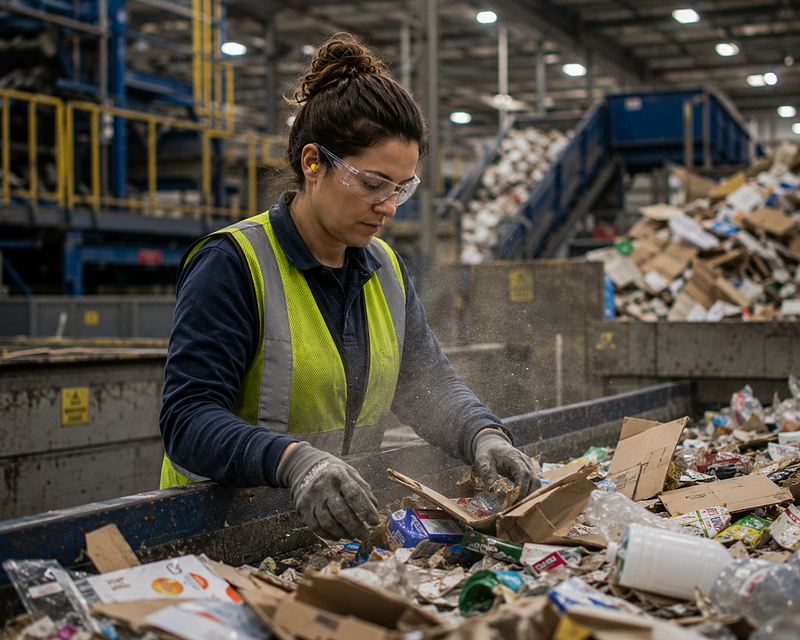
Airborne contamination begins the moment waste enters your recycling facility.
From mixed waste to paper, plastics, textiles and metals, waste processing and material recovery release airborne contamination. Dust, fibres and bioaerosols can travel through sorting cabins, transfer points and downstream operations becoming part of the air your people breathe.
Waste reception
Air quality challenges begin as soon as waste is unloaded. Tipping and handling mixed materials releases dust, fibres and fine particles before sorting even begins, adding to the background contamination your people work around.
Sorting operations
Manual and automated sorting lines continuously disturb lightweight materials such as paper, cardboard, plastics and textiles. Dust and fibres become airborne around sorting lines and can travel into adjacent work areas.
Shredding and size reduction
Shredders, crushers and granulators break materials down, and release fine particles in the process. Depending on the waste stream, plastic dust, wood dust, metal particles and fibres can remain airborne long after materials leave the machine.
Screening and conveying
Trommels, vibrating screens, conveyors and transfer points keep material recovery moving. But every movement can disturb settled dust and put fine particles back into the air.
Organic residues and odours
Municipal and mixed waste can contain organic residues that release bioaerosols, odours and other airborne contaminants. In enclosed waste processing environments, these can become part of the shared air employees work in throughout the day.
Beyond the source
Contamination doesn't stay where it was generated. Forklifts, loaders, conveyors, airflow and everyday activity can redistribute particles into sorting cabins, maintenance areas, baling stations and other shared workspaces.
When airborne contamination affects more than waste processing.
Airborne contamination affects far more than housekeeping. Across recycling and material recovery facilities, it can impact your people, equipment and the efficiency needed to keep valuable materials moving.

Your people work alongside changing waste streams throughout every shift. Repeated exposure to airborne dust, fibres, fine particles and bioaerosols can increase respiratory irritation, discomfort and concerns about long-term workplace exposure.

Dust accumulates beneath conveyors, around transfer points, inside sorting cabins and on elevated steelwork throughout the facility. Cleaning takes valuable time and resources, while fine airborne particles can begin settling again almost immediately.

Dust can accumulate on conveyors, optical sorters, sensors and electrical cabinets, interfering with sensitive equipment. As contamination builds, so can cleaning, maintenance and the risk of unplanned downtime.

Efficient material recovery depends on keeping waste moving. Cleaning interruptions, maintenance and dust-related disruption can slow processing, reduce available production time and put pressure on throughput.

Paper, wood, plastics and other combustible materials can generate dust during waste processing. When combustible dust accumulates on equipment, structures and electrical installations, effective dust management becomes an important part of maintaining a safer recycling environment.

Recycling is designed to protect resources. It shouldn't come at the expense of the people doing the work. Managing airborne contamination helps ensure better environmental outcomes go hand in hand with a cleaner, healthier working environment.

Employee health
Your people work alongside changing waste streams throughout every shift. Repeated exposure to airborne dust, fibres, fine particles and bioaerosols can increase respiratory irritation, discomfort and concerns about long-term workplace exposure.

Housekeeping
Dust accumulates beneath conveyors, around transfer points, inside sorting cabins and on elevated steelwork throughout the facility. Cleaning takes valuable time and resources, while fine airborne particles can begin settling again almost immediately.

Equipment reliability
Dust can accumulate on conveyors, optical sorters, sensors and electrical cabinets, interfering with sensitive equipment. As contamination builds, so can cleaning, maintenance and the risk of unplanned downtime.

Operational efficiency
Efficient material recovery depends on keeping waste moving. Cleaning interruptions, maintenance and dust-related disruption can slow processing, reduce available production time and put pressure on throughput.

Fire risk
Paper, wood, plastics and other combustible materials can generate dust during waste processing. When combustible dust accumulates on equipment, structures and electrical installations, effective dust management becomes an important part of maintaining a safer recycling environment.

Sustainability
Recycling is designed to protect resources. It shouldn't come at the expense of the people doing the work. Managing airborne contamination helps ensure better environmental outcomes go hand in hand with a cleaner, healthier working environment.
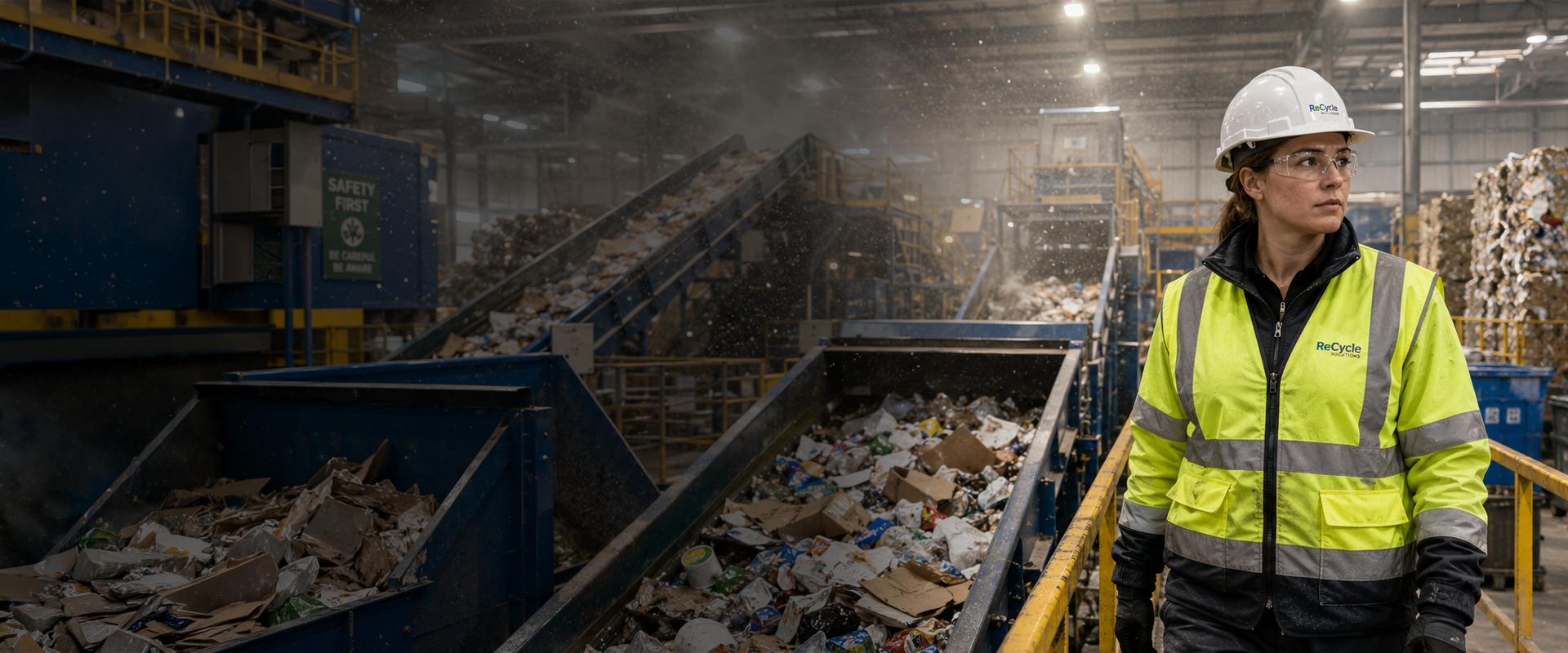
Every recycled material deserves a cleaner journey. So do the people processing it.
Every day, recycling professionals recover valuable resources from materials others throw away. The people building a more circular economy deserve a cleaner, healthier environment to work in.
Waste rarely follows a straight line through a recycling facility. Neither does airborne contamination. As materials are tipped, sorted, processed and moved, particles can travel far beyond where they were generated.
That's why understanding your workplace air quality is the first step.
Understand what’s really in your air.
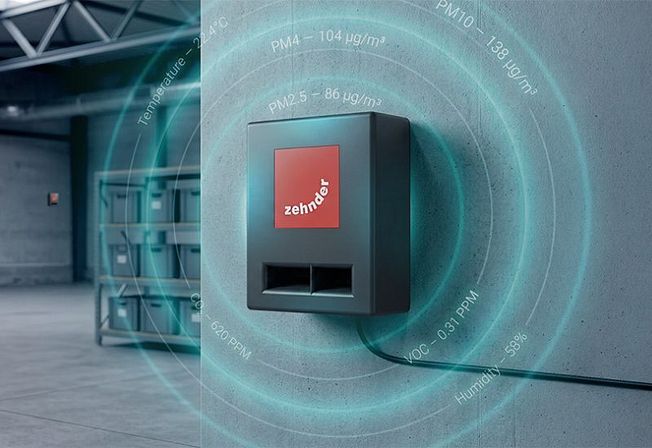
Air quality monitoring turns an invisible challenge into measurable insight, showing how airborne particle levels change across your recycling facility.
It helps you:
- Identify airborne contamination hotspots
- Compare particle levels between different areas
- Understand how contamination changes throughout the day
- Measure the effectiveness of existing dust control measures
- Prioritise improvements using objective air quality data
Understand what’s really in your air.
Industrial air cleaning protects your people and your recycling operation.
Industrial air cleaning protects your people and your recycling operation.
Once you understand your workplace air quality, you can take targeted action.
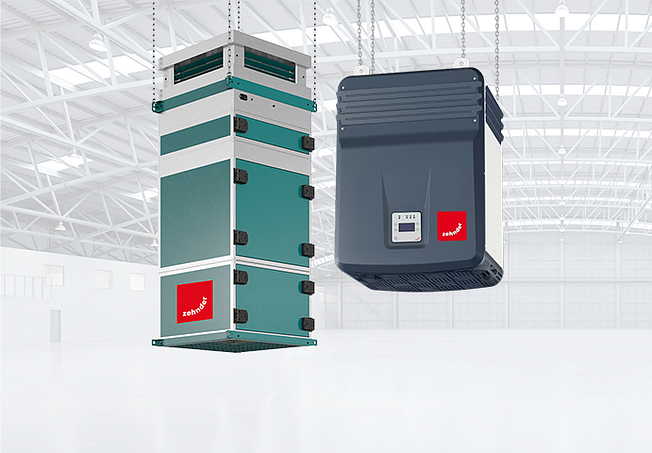
Industrial air cleaning continuously reduces airborne particles circulating across waste processing and material recovery areas, helping protect employees, reduce housekeeping demands and create cleaner, more stable operating conditions.
See why cleaner air matters to the people behind material recovery.
Questions we hear from recycling and waste processing operators every day.
Why does background dust remain a challenge even when shredders and sorting equipment are fitted with extraction?
Extraction remains essential, but not every particle is captured at source. Material handling, conveyors, vehicles and everyday activity can redistribute escaped dust, creating background airborne contamination across the facility.
Which stages of waste processing and material recovery generate the highest airborne particle concentrations?
Waste reception, sorting, shredding, crushing, screening, conveying and baling can all release airborne particles. Levels and composition vary depending on the waste stream, material and process.
Why should air quality be monitored across the entire recycling facility rather than at individual machines?
Airborne contamination doesn't always remain at its source. Facility-wide monitoring helps reveal where particles travel, identify hotspots and understand how air quality changes across different waste processing areas.
How do different waste streams influence airborne contamination?
Different waste streams create different airborne challenges. Paper and cardboard release cellulose dust, plastics generate fine particles, textiles produce fibres, while mixed waste may also introduce bioaerosols and odours.
Why do employees experience dust exposure even when they don't operate shredders or sorting equipment?
Fine particles can remain airborne after they're generated and travel with airflow, vehicles, materials and people. That means employees in sorting cabins, maintenance areas and loading zones may encounter contamination generated elsewhere.
How does airborne contamination affect equipment reliability in recycling facilities?
Dust can accumulate on conveyors, optical sorters, sensors and electrical cabinets. Over time, contamination can increase cleaning and maintenance demands and contribute to equipment problems and unplanned downtime.
Can industrial air cleaning replace local extraction systems?
No. They perform different roles. Extraction captures contamination at the source, while industrial air cleaning reduces airborne particles that escape and circulate through the wider facility. Together, they provide complementary layers of air quality control.
Ready to improve air quality throughout your recycling facility?
Every recycling facility has its own air quality challenges. I'd be delighted to learn more about your waste streams and material recovery processes, answer your questions and help you find the best way to reduce airborne contamination across your workplace.