






Air quality challenges in plastics and rubber manufacturing

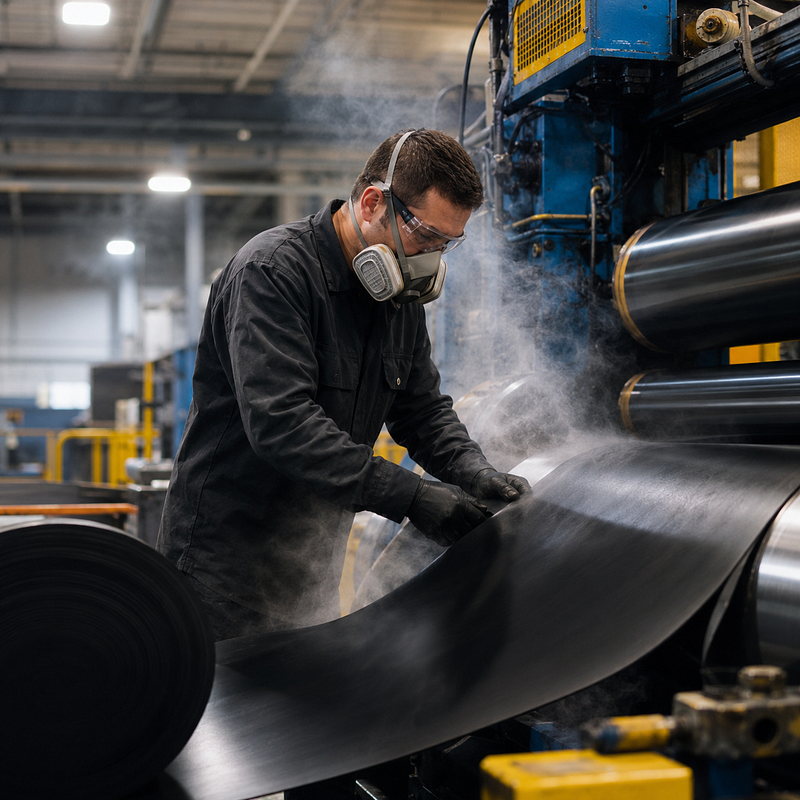
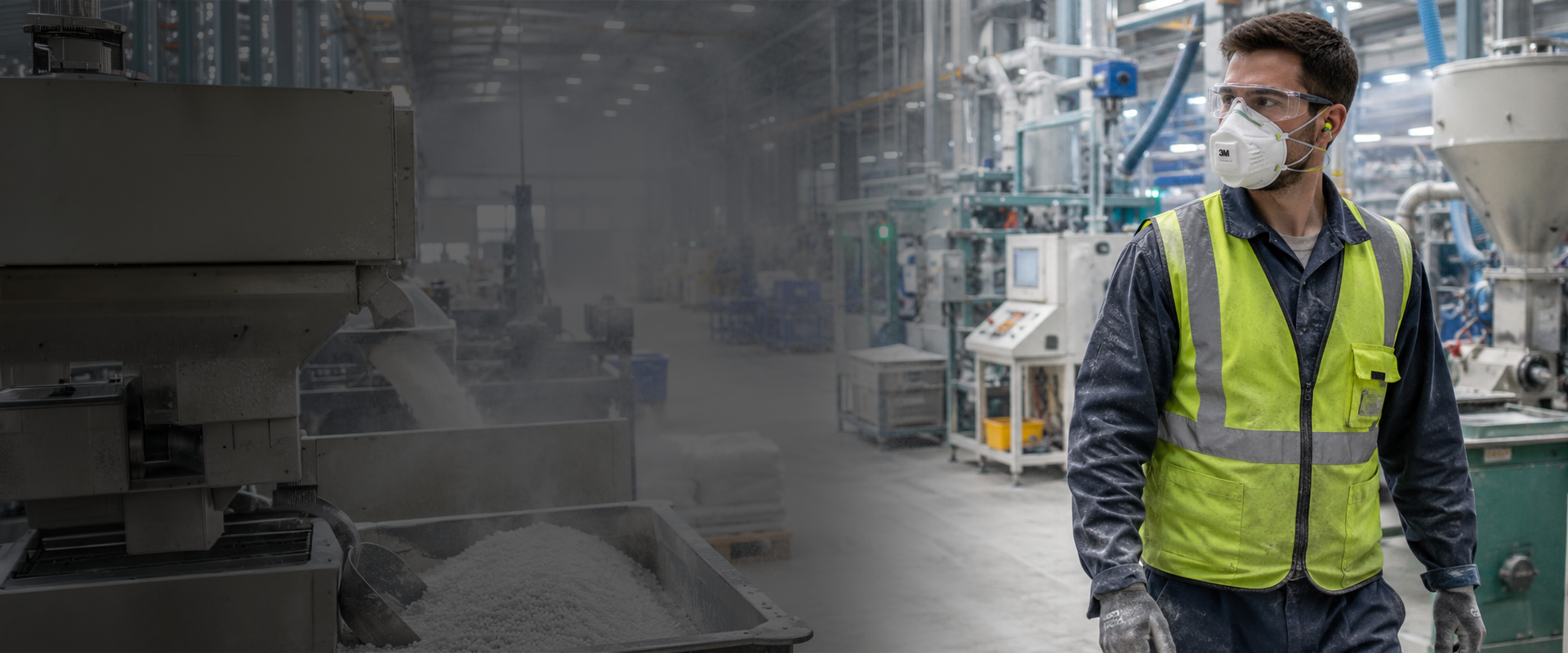
From conveying resin and compounding polymers to extrusion, injection moulding, grinding and finishing, airborne contamination is generated throughout plastics and rubber manufacturing. What leaves the process can become part of the air your people breathe.

Air quality challenges in plastic and rubber industry

Where do air quality challenges begin in plastics and rubber manufacturing?

From weighing and mixing raw materials to moulding, trimming and grinding finished parts, plastic dust, rubber dust and other fine particles are generated throughout production. What starts at one process can become an air quality challenge across the wider facility.

Raw material handling

Weighing and tipping polymer powders, fillers, pigments, carbon black and rubber compounds can release fine particles before manufacturing even begins.

Compounding & mixing

Every formulation brings materials together – and can put fine particles into the air. Mixing polymers with fillers, pigments, carbon black and performance additives creates contamination around compounding areas.

Extrusion & moulding

Continuous extrusion and moulding can generate process emissions as polymers are heated and formed, adding another airborne challenge to busy production environments.

Grinding & regrind

Regrinding runners, sprues and production scrap keeps material in the process, but grinding can release fine plastic dust into the surrounding workplace.

Finishing & trimming

Cutting, trimming and deflashing create the finished component, while releasing fine plastic dust and rubber dust around surrounding workstations.

Material conveying

Pellets may look dust-free, but conveying tells a different story. Pneumatic systems, transfer points and hopper loading can generate fine particles through abrasion and repeated material movement.

Small particles can create big challenges across production.

Even the smallest airborne particles can have a disproportionate impact. Across plastics and rubber manufacturing, contamination can affect your people, products, equipment and the consistency of production itself.

Employee health and retentionEmployee health

Production may move from batch to batch, but your people remain in the environment all shift. Repeated exposure to airborne particles and process emissions can affect respiratory health and workplace wellbeing.


Cleaning and housekeepingHousekeeping

Cleaning what you can see doesn't remove what's still airborne. As plastic dust and rubber dust continue to settle, keeping production areas consistently clean becomes a continuous task.

Lower productivity and efficiency Operational efficiency

Every cleaning stop takes production with it. Time spent cleaning machines, lines and surrounding workspaces is time taken away from productive manufacturing.

Product qualityProduct quality

Precision parts leave little room for contamination. Fine particles settling on moulded parts and finished components can contribute to surface defects, contamination and unnecessary rejects.

Equipment reliabilityEquipment reliability

Fine particles can accumulate inside electrical cabinets, sensors, robots and automated equipment, increasing maintenance requirements and the risk of unexpected downtime.

Process instabilityProcess stability

Consistent production depends on controlled conditions. Airborne contamination introduces another variable, increasing the risk of process disruption, quality variation and inconsistent output.

Employee health and retention

Employee health

Production may move from batch to batch, but your people remain in the environment all shift. Repeated exposure to airborne particles and process emissions can affect respiratory health and workplace wellbeing.

Cleaning and housekeeping

Housekeeping

Cleaning what you can see doesn't remove what's still airborne. As plastic dust and rubber dust continue to settle, keeping production areas consistently clean becomes a continuous task.

Lower productivity and efficiency

Operational efficiency

Every cleaning stop takes production with it. Time spent cleaning machines, lines and surrounding workspaces is time taken away from productive manufacturing.

Product quality

Product quality

Precision parts leave little room for contamination. Fine particles settling on moulded parts and finished components can contribute to surface defects, contamination and unnecessary rejects.

Equipment reliability

Equipment reliability

Fine particles can accumulate inside electrical cabinets, sensors, robots and automated equipment, increasing maintenance requirements and the risk of unexpected downtime.

Process instability

Process stability

Consistent production depends on controlled conditions. Airborne contamination introduces another variable, increasing the risk of process disruption, quality variation and inconsistent output.

Air quality challenges in plastics and rubber industry
Air quality challenges in plastics and rubber industry | Wake-up call | Mobile

The processes that shape your plastic products also shape your workplace air.

What leaves the process doesn't always leave the workplace.

Plastic dust, rubber dust and airborne particles move with airflow, people and materials, throughout your facility, reaching employees and production areas beyond where they were generated. Maintaining cleaner air helps create healthier workplaces, more stable production environments and better conditions for consistent manufacturing.

Discuss your air quality challenges

Production conditions change throughout the day, and airborne exposure can change with them. Without objective data, it's difficult to know where contamination is highest, when exposure increases and which areas are most affected.

That's why understanding your workplace air quality is always the first step.

Understand what’s really in your air.

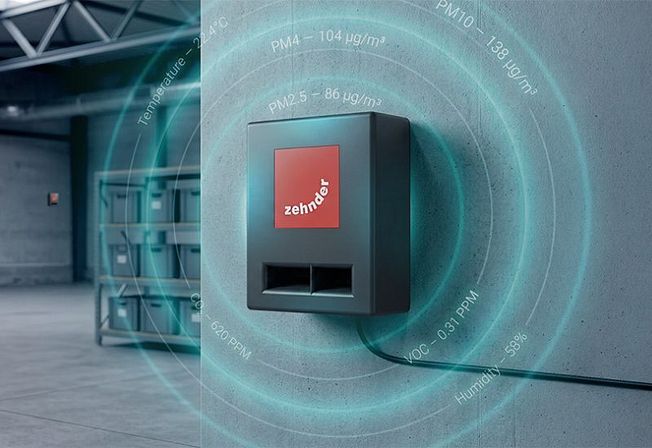
Air quality monitoring turns an invisible challenge into measurable evidence, showing where airborne contamination is highest and how exposure changes across your production environment.

It helps you:

  • Identify airborne contamination hotspots across your facility
  • Understand exposure across different production processes
  • Compare production, warehouse and office areas
  • Validate improvement measures with objective air quality data
  • Make informed operational decisions with objective data

Explore our industrial air quality monitors

Understand what’s really in your air.

Industrial air quality monitors

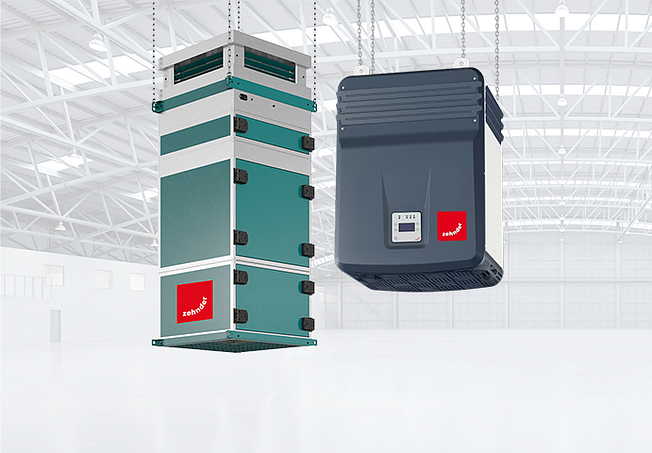
Industrial air cleaning protects your people and your production.

industrial-air-purifiers

Industrial air cleaning protects your people and your production.

Once you understand your workplace air quality, you can take targeted action.

Industrial air cleaning continuously reduces plastic dust, rubber dust and other fine particles as they circulate, reducing employee exposure, limiting dust accumulation, saving sensitive equipment and creating cleaner conditions for consistent production.

Discover our industrial air purifiers

See how cleaner air helps plastics manufacturers improve production quality and efficiency.

The improvement in our air quality was almost immediate and far more extensive than we imagined. I was surprised and very impressed. The most significant change was the reduction in particle inclusions. This made the production process much more efficient.

Questions we hear from plastics and rubber manufacturers every day.

Why does plastic dust spread throughout a manufacturing facility?

Plastic dust rarely stays where it is generated. Air movement, pneumatic conveying, material handling and everyday production activity can carry fine particles beyond the original process and into surrounding production areas, warehouses and shared workspaces.

Does grinding plastic create airborne dust?

Yes. Grinding runners, sprues and production scrap is one of the most significant sources of airborne plastic dust. These fine particles remain suspended in the air long after grinding has finished and can spread throughout surrounding production areas.

Can airborne rubber and plastics dust affect product quality?

Yes. Airborne particles can settle on moulded components, finished products and production equipment, increasing the risk of contamination, cosmetic defects and unnecessary rejects. Maintaining cleaner air helps support more consistent manufacturing conditions.

Why isn't source extraction always enough in plastics and rubber manufacturing?

Source extraction remains essential, but not every particle is captured. Escaped plastic and rubber dust can circulate throughout the facility. Industrial air cleaning complements extraction by removing this background contamination from shared workplace air.

Can airborne particles affect plastics manufacturing equipment?

Yes. Fine plastic dust and rubber dust can accumulate inside electrical cabinets, sensors, robots and automated equipment, increasing cleaning requirements, maintenance effort and the risk of unexpected downtime.

How can industrial air cleaning support plastics and rubber manufacturing?

Industrial air cleaning continuously removes airborne plastic and rubber dust, helping reduce employee exposure, protect equipment and support cleaner, more consistent production.

Why is plastic or rubber dust still a problem if the facility looks clean?

Visible dust only tells part of the story. The finest airborne particles can remain suspended long after a process has finished and may travel into areas that appear clean. Air quality monitoring helps reveal where these particles are present, how concentrations change during production and where additional control may be needed.

Ready to improve air quality across your plastics and rubber manufacturing facility?

Every plastics and rubber facility has its own air quality challenges. I’d be delighted to learn more about your processes, answer your questions and help you find the best way to reduce plastic dust, rubber dust and airborne contamination across your workplace.

MCNCUVDDHYDJCHVATRHZEIOHXYYI?oid=00D24000000ef4qEAA&channelId=0ap08000000XZz7AAG
Ben Simons Country ManagerUnited Kingdom
MCNCUVDDHYDJCHVATRHZEIOHXYYI?oid=00D24000000ef4qEAA&channelId=0ap08000000XZz7AAG