





Air quality challenges in metal and welding fabrication

Every weld, every cut and every grinding process generates airborne contamination. The challenge is what happens to welding fumes, grinding dust and metal particles once they leave the source.

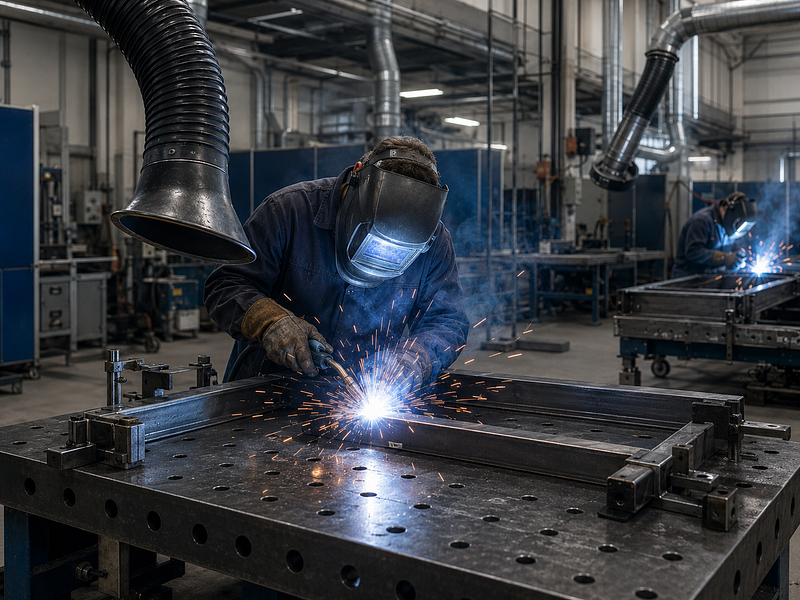
Welder wearing a protective helmet welding a metal frame with sparks flying in a metal fabrication workshop

Where air quality challenges begin in metal fabrication.

Welding, grinding, thermal cutting, surface preparation and CNC machining all generate airborne contamination. Even with extraction at the source, welding fumes, grinding dust, metal particles and oil mist can escape into the wider workplace.

Welding

Every weld generates fine and ultrafine metal particles. Welding fumes that escape source extraction can remain airborne long after the welding stops.

Grinding and surface preparation

Grinding, deburring, polishing and shot blasting release fine metal particles and grinding dust that can remain suspended in the air before settling on machinery, products and surrounding work areas.

Thermal cutting and hot work

Laser, plasma and flame cutting generate metal particles and fumes that can move beyond the workstation into surrounding production areas.

CNC machining

Coolants and lubricants used in CNC machining can generate oil mist that settles on machinery, electrical equipment and surrounding surfaces.

Material handling

Forklifts, cranes and everyday material handling disturb settled grinding dust and metal particles, putting them back into the air.

Beyond the workstation

Airflow, open doors and everyday activity can carry welding fumes, grinding dust, metal particles and oil mist into warehouses, quality areas, maintenance workshops and offices.

Why extraction systems don’t stop every air quality challenge.

Extraction systems are essential for controlling contamination at the source. But under real production conditions, welding fumes, grinding dust, metal particles and oil mist can still escape into the wider workplace.

Employee health and retentionEmployee health

The people most exposed aren't always the people creating the contamination. Supervisors, maintenance engineers, warehouse teams, quality inspectors, visitors and office employees all breathe the same shared air throughout the day.


Compliance and audit risksWorkplace safety and compliance

Extraction systems and PPE remain essential for workplace safety. However, controlling exposure at the source doesn't automatically prevent airborne contamination from travelling beyond the machine where it was generated.

Product qualityProduct quality

Airborne metal particles and grinding dust can settle on finished components, painted surfaces and precision parts, increasing risk of contamination, rework rejected products, and customer complaints.

Cleaning and housekeepingCleaning and maintenance

Oil mist, grinding dust and fine metal particles accumulate on machinery, lighting, electrical cabinets and building structures, increasing cleaning effort, maintenance requirements and downtime.

Lower productivity and efficiency Productivity

When airborne contamination affects your people, productivity can feel it too. More cleaning, more maintenance and more interruptions take time and resources away from keeping production moving.

Employee health and retention

Employee health

The people most exposed aren't always the people creating the contamination. Supervisors, maintenance engineers, warehouse teams, quality inspectors, visitors and office employees all breathe the same shared air throughout the day.

Compliance and audit risks

Workplace safety and compliance

Extraction systems and PPE remain essential for workplace safety. However, controlling exposure at the source doesn't automatically prevent airborne contamination from travelling beyond the machine where it was generated.

Product quality

Product quality

Airborne metal particles and grinding dust can settle on finished components, painted surfaces and precision parts, increasing risk of contamination, rework rejected products, and customer complaints.

Cleaning and housekeeping

Cleaning and maintenance

Oil mist, grinding dust and fine metal particles accumulate on machinery, lighting, electrical cabinets and building structures, increasing cleaning effort, maintenance requirements and downtime.

Lower productivity and efficiency

Productivity

When airborne contamination affects your people, productivity can feel it too. More cleaning, more maintenance and more interruptions take time and resources away from keeping production moving.

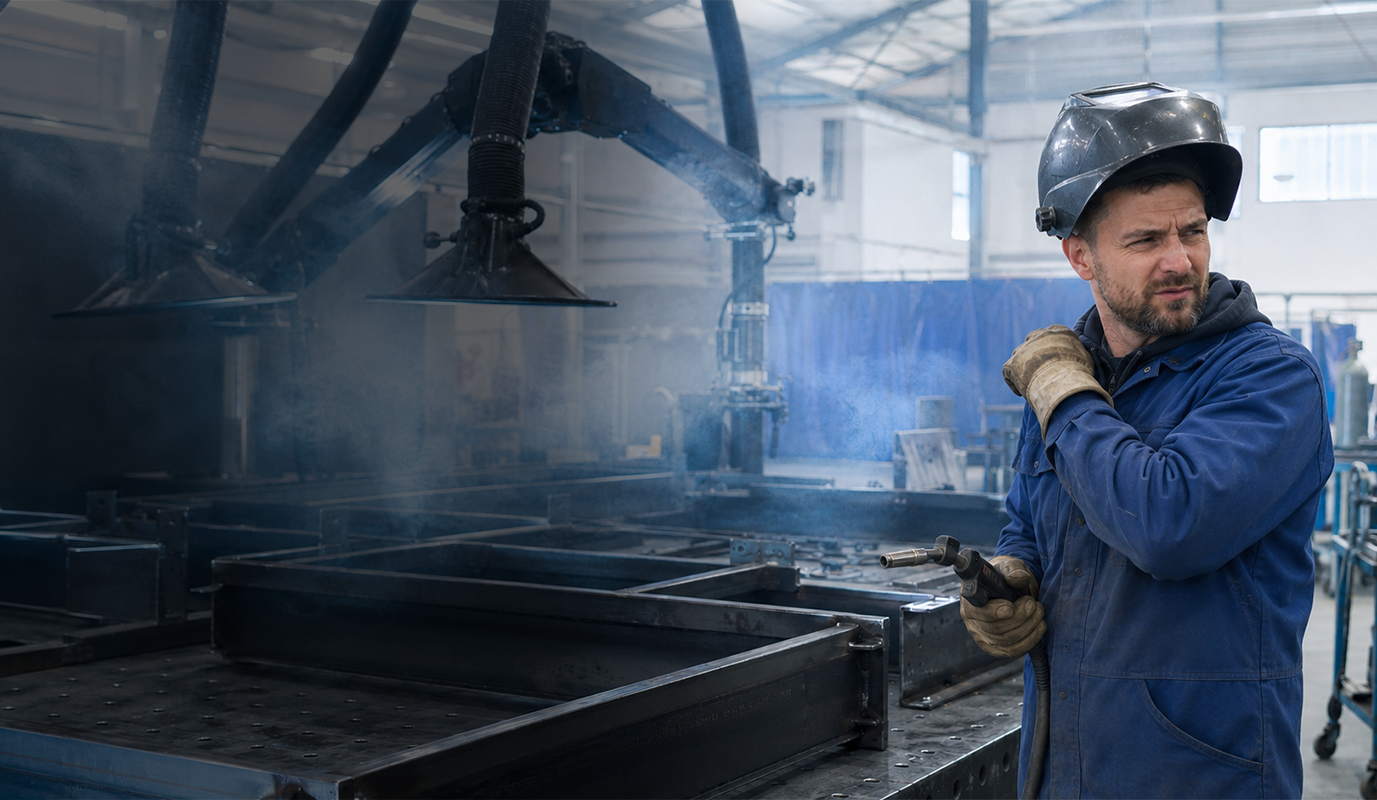
Worker in a hard hat coughing and covering his mouth amid smoke and fumes in a metal manufacturing facility

The biggest air quality challenge isn't always standing at the machine. It's often walking through the workshop.

The people most exposed aren't always the people creating the contamination. Airborne welding fumes, grinding dust, fine metal particles and oil mist don't follow job titles. They follow airflow.

They travel through shared workplace air, exposing machine operators, warehouse teams, maintenance engineers, quality inspectors, office employees and visitors moving throughout the facility.

This is known as pedestrian exposure, and it can put people at risk far beyond the original process. Protecting your people starts with knowing where that exposure occurs

Discuss your air quality challenges

Exposure changes as people, processes and production activity change throughout the working day. Without objective data, it's difficult to know where the greatest air quality challenges really are.

That's why measuring workplace air quality is always the first step.

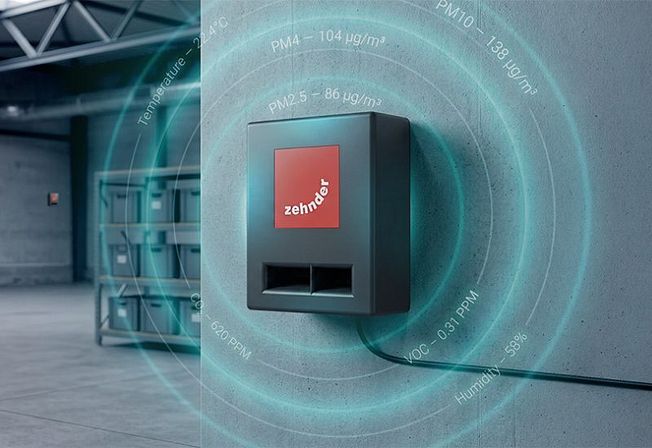
Understand what’s really in your air.

Air quality monitoring turns an invisible challenge into measurable evidence, revealing where airborne contamination is highest and where exposure occurs across your facility.

It helps you:

  • Identify airborne contamination hotspots
  • Understand exposure during different manufacturing processes
  • Compare production, warehouses, offices and shared workspaces
  • Validate improvement measures using objective air quality data
  • Make informed operational decisions with measurable evidence

Explore our industrial air quality monitors

Understand what’s really in your air.

Industrial air quality monitors

Industrial air cleaning protects people, products and productivity.

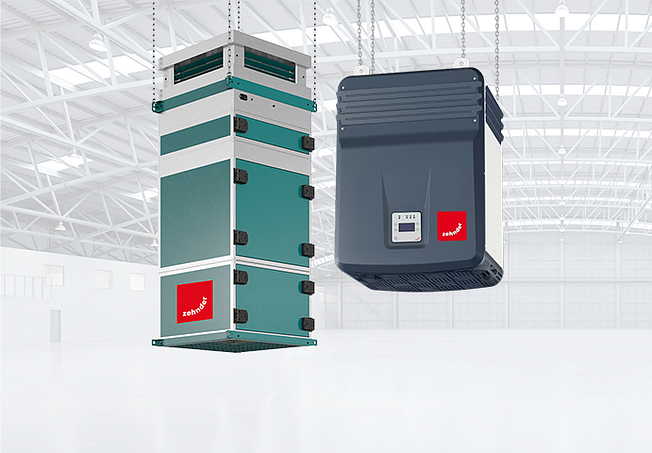
Zehnder CleanAir and CleanAir Max air purifiers compared

Industrial air cleaning protects people, products and productivity.

Once you know where exposure occurs, you can take targeted action.

Industrial air cleaning continuously removes welding fumes, grinding dust, metal particles and oil mist that escape source extraction and remain in the wider workplace.

Working alongside existing extraction systems, it helps reduce airborne contamination beyond the workstation.

Discover our industrial air purifiers

See how cleaner air makes a difference on the shop floor.

Questions we hear from metal fabricators every day.

What are the biggest air quality challenges in metal fabrication?

Welding, grinding, thermal cutting, surface preparation and CNC machining can generate welding fumes, grinding dust, metal particles and oil mist. When these escape source capture, they can create air quality challenges across the wider facility.

What are welding fumes?

Welding fumes are microscopic airborne particles created when metal is heated and rapidly cools. Depending on the material and process, they may contain substances such as iron, manganese, chromium or nickel. Many particles are so small they remain invisible and can stay suspended in the air long after welding has finished.

What is grinding dust?

Grinding, deburring, sanding and finishing generate grinding dust and fine metal particles. The smallest particles can remain airborne or be disturbed again by machinery, forklifts and movement through the workshop.

What is oil mist?

Oil mist forms when coolants and lubricants become aerosolised during CNC machining, milling and turning. Fine droplets can spread beyond the machine and accumulate on equipment and surrounding surfaces.

Can welding fumes travel beyond the welding area?

Yes. Fine welding fumes can move with airflow beyond the workstation and into walkways, warehouses, quality areas, maintenance workshops and offices.

Why are people outside the welding area exposed to welding fumes?

Airborne contaminants don't follow job titles – they follow airflow. When welding fumes move beyond the workstation, maintenance teams, supervisors, quality inspectors, warehouse employees and others may encounter them during the working day.

Isn't extraction enough to control airborne contamination?

Extraction remains essential for capturing welding fumes, grinding dust and other contaminants at the source. But particles that escape source capture can create air quality challenges elsewhere in the facility, which is where additional control measures may be needed.

How can I improve air quality in my metal fabrication facility?

Effective air quality management combines appropriate source capture, PPE, housekeeping, air quality monitoring and additional controls where required. Measuring workplace air quality can reveal where exposure remains and help manufacturers target improvements more effectively.

How can I identify air quality challenges in my welding workshop?

Air quality monitoring can reveal where airborne contamination is highest and how exposure changes across different processes, work areas and times of day.

Ready to improve air quality across your metal or welding fabrication facility?

Every metal fabrication facility has its own air quality challenges. I’d be delighted to learn more about your processes, answer your questions and help you identify the best way to reduce welding fumes, grinding dust, metal particles and oil mist across your workplace.

MCNCUVDDHYDJCHVATRHZEIOHXYYI?oid=00D24000000ef4qEAA&channelId=0ap08000000XZz7AAG
Ben Simons Country ManagerUnited Kingdom
MCNCUVDDHYDJCHVATRHZEIOHXYYI?oid=00D24000000ef4qEAA&channelId=0ap08000000XZz7AAG