
You could taste what you manufacture – that's how dusty it was. Now the air feels clean, and we don't even have to think about it.
Air quality challenges in the wood industry
Freshly cut wood has a smell you instantly recognise. But when the dust and smell of the working day follow your people home, it tells a different story about the air they've been breathing.
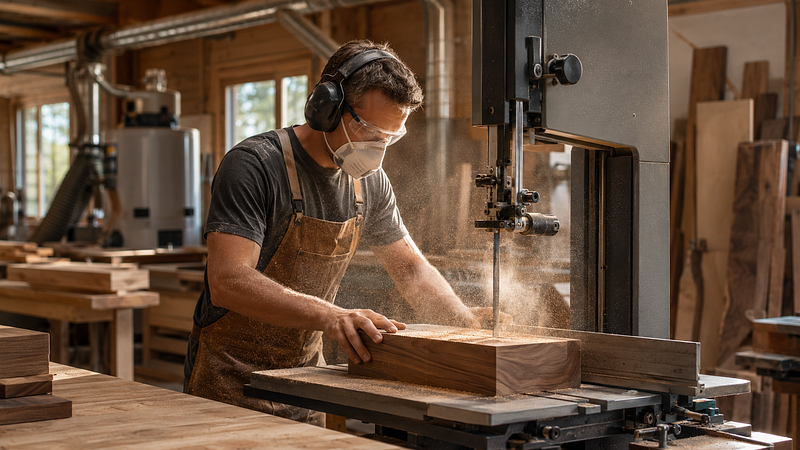
Wood dust travels further than you think.
From the first cut to the finished product, wood dust is generated and disturbed throughout wood manufacturing, processing and joinery.
Sawing
Cross-cutting, rip sawing and panel cutting release sawdust and fine airborne wood dust directly into the workplace environment.
Sanding and finishing
Manual sanding, belt sanding and surface finishing generate particularly fine wood dust and MDF dust, which can remain airborne long after the task is finished.
CNC machining and routing
CNC machines, routing, drilling and milling operations continuously generate fine airborne wood dust as timber, MDF and other materials are processed.
Material handling and assembly
Moving timber, MDF panels and finished components can disturb settled dust, while trimming, assembly and packaging create further opportunities for particles to become airborne.
Storage and logistics
Forklifts, pallet movements and loading activity can put settled wood dust back into the air, extending the challenge far beyond the machine where it began.
Shared workspaces
Wood dust doesn't follow production boundaries. Airflow, open doors and everyday movement can carry fine particles into walkways, maintenance areas, offices and other shared spaces.
When invisible airborne wood dust becomes a business risk.
You see sawdust settling on machines, floors and surfaces. You clean it away. But the bigger air quality challenge is the fine wood dust still circulating through the air your people breathe.

Fine airborne wood dust and MDF dust can affect respiratory health, with repeated workplace exposure associated with occupational asthma and other respiratory conditions. For your people, what remains in the air matters just as much as the dust you can see.

Extraction and workplace controls remain essential for managing wood dust exposure. But compliance at the machine doesn't tell you what's happening in the wider workshop when fine particles escape source capture and become part of the shared air.

Fine wood dust is combustible. When it accumulates on machinery, electrical equipment and overhead surfaces, it can contribute to fire and dust explosion risks, making effective dust management important for more than the air people breathe.

Airborne wood dust can settle on finished products, painted and coated surfaces and sensitive finishing areas. Even fine contamination can compromise the finish, increase rework and make consistent quality harder to maintain.

Wood dust settles far beyond where it's generated, accumulating on machinery, lighting and electrical equipment. That means more cleaning, more maintenance and more time spent managing dust instead of manufacturing.

In busy wood manufacturing and joinery workshops, every cleaning interruption, maintenance task and dust-related rework costs productive time. Better control of airborne dust means less time managing the problem and more time focused on the work.

Employee health
Fine airborne wood dust and MDF dust can affect respiratory health, with repeated workplace exposure associated with occupational asthma and other respiratory conditions. For your people, what remains in the air matters just as much as the dust you can see.

Workplace safety and compliance
Extraction and workplace controls remain essential for managing wood dust exposure. But compliance at the machine doesn't tell you what's happening in the wider workshop when fine particles escape source capture and become part of the shared air.

Fire and explosion risk
Fine wood dust is combustible. When it accumulates on machinery, electrical equipment and overhead surfaces, it can contribute to fire and dust explosion risks, making effective dust management important for more than the air people breathe.

Product quality
Airborne wood dust can settle on finished products, painted and coated surfaces and sensitive finishing areas. Even fine contamination can compromise the finish, increase rework and make consistent quality harder to maintain.

Cleaning and maintenance
Wood dust settles far beyond where it's generated, accumulating on machinery, lighting and electrical equipment. That means more cleaning, more maintenance and more time spent managing dust instead of manufacturing.

Productivity
In busy wood manufacturing and joinery workshops, every cleaning interruption, maintenance task and dust-related rework costs productive time. Better control of airborne dust means less time managing the problem and more time focused on the work.
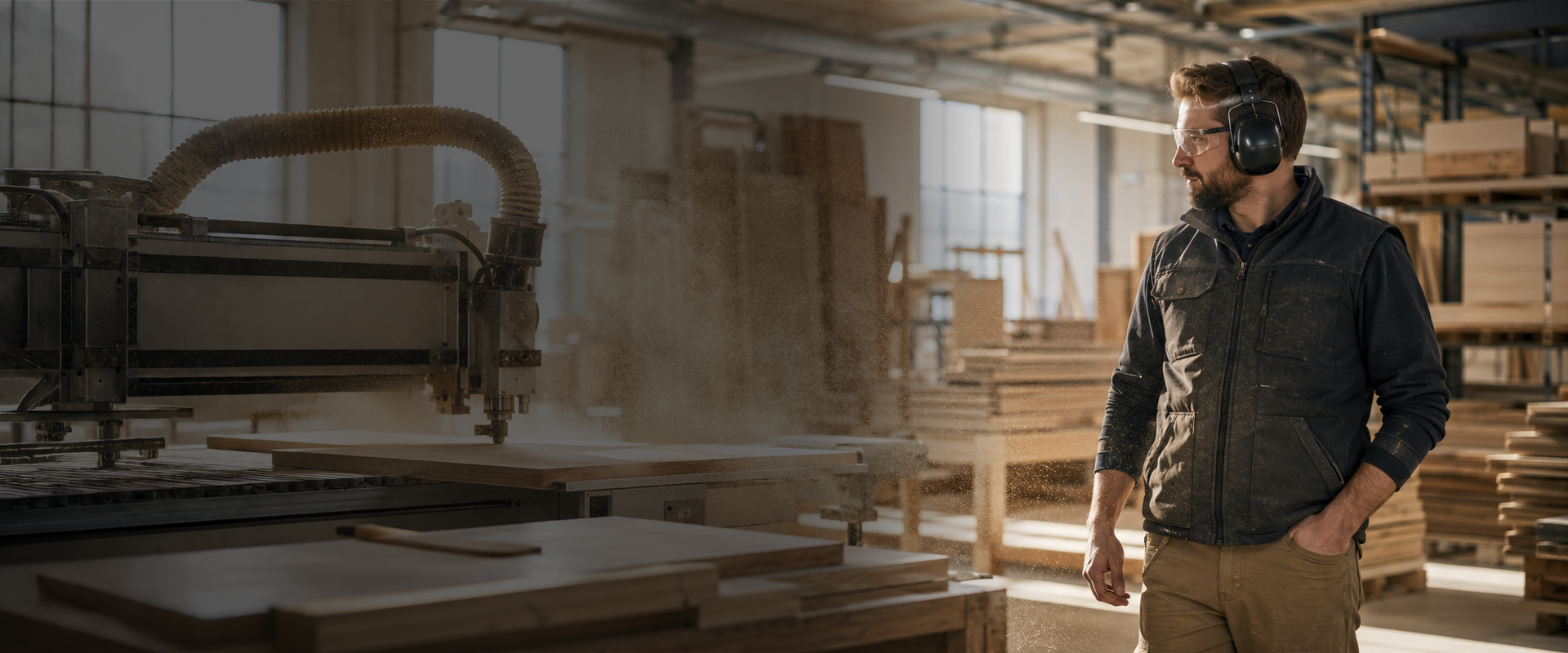
Your employees shouldn't take work home with them.
Many woodworkers know the moment. Someone notices the smell of freshly cut timber on their clothes.
That familiar smell tells a bigger story about what can travel beyond the machine. Fine airborne wood dust moves through shared workplace air, reaching people who may never operate woodworking machinery themselves. This is pedestrian exposure.
Wood dust doesn't stop when it leaves the machine. It moves with airflow, activity and people, changing where exposure occurs throughout the working day.
That's why measuring your workplace air is always the first step.
Understand what’s really in your air.
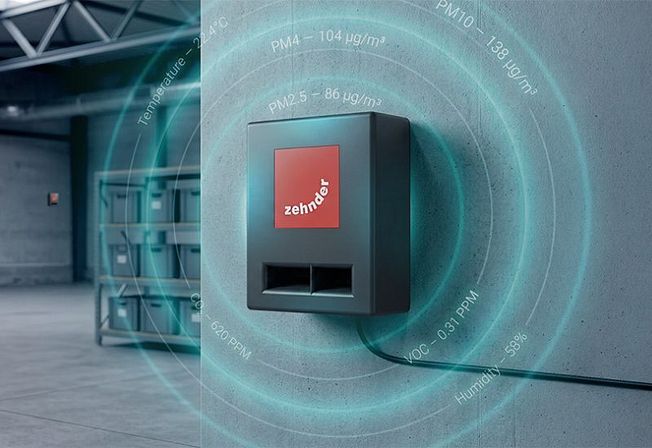
Air quality monitoring turns an invisible challenge into measurable insight, showing where airborne wood dust builds up and how particle levels change across your workplace.
It helps you:
- Identify airborne wood dust hotspots
- Understand exposure during different production processes
- Compare machining, assembly, warehouses, offices and shared workspaces
- Validate improvement measures with objective air quality data
- Support workplace decisions with measurable evidence
Understand what’s really in your air.
Industrial air cleaning protects people, products and productivity.
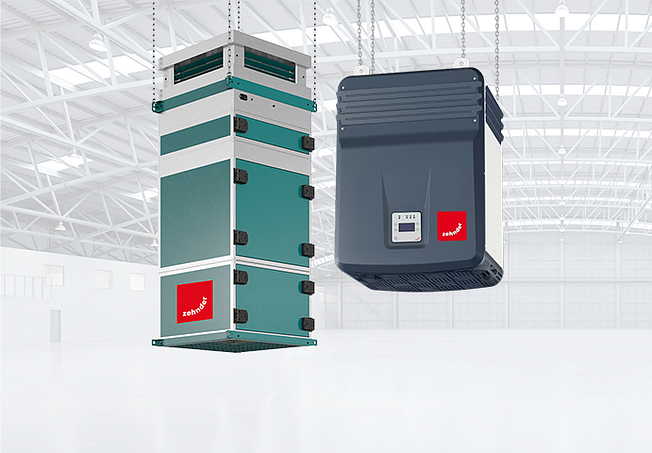
Industrial air cleaning protects people, products and productivity.
Once you understand your workplace air, you can take targeted action.
Industrial air cleaning continuously reduces airborne wood dust and MDF dust across your workplace, complementing source extraction by cleaning the shared air beyond the machine. This helps reduce exposure, protect production and create a cleaner working environment.
See what cleaner air changed for people on the workshop floor.
Questions we hear from wood manufacturers every day.
What is wood dust?
Wood dust is released when timber and engineered wood products such as MDF are cut, sanded, routed or machined. Larger particles settle quickly, while finer airborne wood dust can remain suspended and be inhaled during the working day.
Where is airborne wood dust generated?
Cutting, CNC machining, routing, sanding, finishing and material handling can all generate or disturb wood dust. Even after machining stops, forklifts, airflow and everyday activity can put settled dust back into circulation.
What is pedestrian exposure in the wood industry?
Pedestrian exposure occurs when people who aren't operating woodworking machinery still encounter airborne wood dust in shared workplace air. Supervisors, warehouse teams, maintenance staff, cleaners, office employees and visitors can all be exposed as fine particles travel beyond production areas.
Why doesn't wood dust stay near the machine?
The finest wood dust particles can behave more like smoke than sawdust. They move with airflow through wood workshops and shared spaces, while forklifts, open doors and everyday movement can put settled dust back into circulation.
Is wood dust dangerous?
Wood dust is more than a housekeeping issue. Workplace exposure is associated with respiratory irritation and occupational asthma, which is why controlling fine airborne wood dust is an important part of protecting employee health.
Is extraction enough to control wood dust?
Source extraction remains essential for capturing wood dust where it's generated, but not every particle is captured under real working conditions. Industrial air cleaning complements extraction by reducing airborne dust that escapes and circulates through the wider workplace.
How can I reduce airborne wood dust in my workshop?
Effective dust control in woodworking and joinery workshops combines source extraction, good housekeeping and wider air quality management. Monitoring helps reveal where airborne dust remains, while industrial air cleaning can reduce particles circulating beyond the source.
How long does wood dust stay in the air?
How long wood dust remains airborne depends on particle size, airflow and workplace activity. Fine particles can remain suspended much longer than visible sawdust and may be repeatedly resuspended after machining has finished.
Ready to improve air quality across your workshop?
Every woodworking facility has its own air quality challenges. I'd be delighted to learn more about your processes, answer your questions and help you find the best way to reduce wood dust and MDF dust across your workplace.