
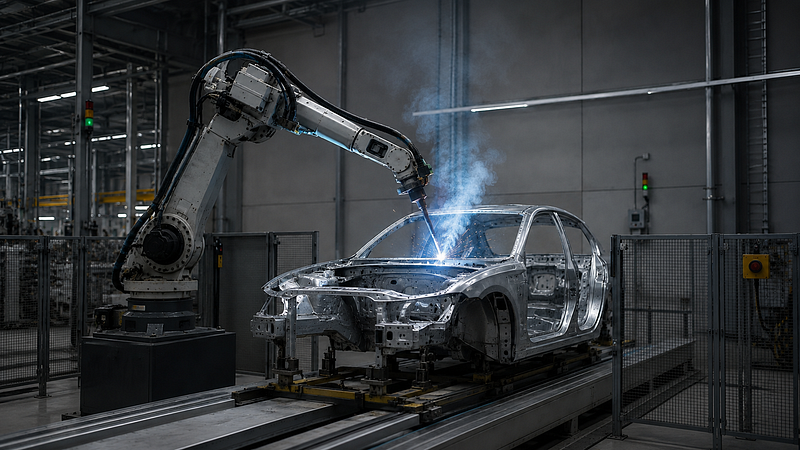






Robotic arms at work in an automotive production hall

Air quality challenges in automotive manufacturing

Every vehicle is built through thousands of precision manufacturing processes. Welding, machining, grinding and assembly all help create the finished product, but they also generate airborne particles that don’t stay where they’re created.

Every vehicle is built through thousands of precision manufacturing processes. Welding, machining, grinding and assembly all help create the finished product, but they also generate airborne particles that don’t stay where they’re created.

Automotive manufacturing creates more than vehicles.

Every stage of automotive manufacturing contributes to the air quality challenges found across modern production facilities. From stamping and welding to machining, grinding, internal logistics and final assembly, airborne particles are generated throughout the entire production process. Some are visible. Most aren't. All become part of the air your people breathe.

Internal logistics

Forklifts, tugger trains and automated vehicles connect production areas, but they also contribute to the continuous movement of airborne particles throughout your facility. Every journey generates tyre wear particles and brake dust. 

Welding fumes

Robot, spot and manual welding generate ultrafine metal particles and welding fumes that remain airborne long after the weld is complete, moving beyond the workstation and into the wider production environment.

Grinding and finishing

Grinding, deburring, sanding and polishing generate grinding dust and finishing dust. Fine particles remain suspended in the air before settling on equipment, components and surrounding production areas.

Machining

Cutting, drilling and CNC machining produce fine metal particles while coolants create oil mist that circulate throughout your production areas.

Assembly operations

Component handling, trimming, packaging materials and plastic parts release fibres and lightweight airborne particles during everyday production in your facility.

Beyond the source

Airborne particles rarely stay where they are generated. Airflow, vehicle movement and daily production activities carry contamination throughout production halls, walkways, maintenance areas and offices – often reaching people and places far beyond the orginal process.

How airborne particles can affect your automotive production.

Automotive manufacturing depends on precision, repeatability and process stability. Every production step is carefully engineered to deliver consistent quality.

Airborne particles, however, don't recognise production cells or assembly lines. They travel with people, forklifts, AGVs and airflow, becoming part of the air your people share.

Employee health and retentionEmployee health

From robotic welding and machining to final assembly and internal logistics, your people spend every shift sharing the same air.  Continuous exposure to welding fumes, grinding dust and other airborne particles can contribute to respiratory irritation and increase long-term health risks.


Manufacturing and process qualityManufacturing quality

Airborne contamination can settle on precision components, assemblies and sensitive production areas, making it harder to maintain the clean manufacturing conditions needed for consistent product quality and right-first-time production.

Equipment reliabilityEquipment reliability

Fine airborne particles accumulate inside robots, automated assembly systems, conveyors, sensors and electrical cabinets. Over time, this increases maintenance requirements, reduces equipment reliability and contributes to unplanned downtime.

Fire riskFire risk

Grinding dust, metal particles and other combustible materials can accumulate across your facility. Managing airborne contamination helps reduce dust builld-up and supports a safer manufacturing environment.

Lower productivity and efficiency Production efficiency

When airborne particles spread beyond the process that created them, cleaning requirements increase, maintenance takes longer and production can be disrupted.

Cleanliness and hygieneWorkplace cleanliness

Airborne particles rarely stay where they're generated. They continue moving through production halls and cells, logistics routes, maintenance workshops and offices, making clean working environments more difficult to maintain across your entire facility.

Employee health and retention

Employee health

From robotic welding and machining to final assembly and internal logistics, your people spend every shift sharing the same air.  Continuous exposure to welding fumes, grinding dust and other airborne particles can contribute to respiratory irritation and increase long-term health risks.

Manufacturing and process quality

Manufacturing quality

Airborne contamination can settle on precision components, assemblies and sensitive production areas, making it harder to maintain the clean manufacturing conditions needed for consistent product quality and right-first-time production.

Equipment reliability

Equipment reliability

Fine airborne particles accumulate inside robots, automated assembly systems, conveyors, sensors and electrical cabinets. Over time, this increases maintenance requirements, reduces equipment reliability and contributes to unplanned downtime.

Fire risk

Fire risk

Grinding dust, metal particles and other combustible materials can accumulate across your facility. Managing airborne contamination helps reduce dust builld-up and supports a safer manufacturing environment.

Lower productivity and efficiency

Production efficiency

When airborne particles spread beyond the process that created them, cleaning requirements increase, maintenance takes longer and production can be disrupted.

Cleanliness and hygiene

Workplace cleanliness

Airborne particles rarely stay where they're generated. They continue moving through production halls and cells, logistics routes, maintenance workshops and offices, making clean working environments more difficult to maintain across your entire facility.

Air quality challenges in automotive
Air quality challenges in automotive | Wake-up call | Mobile

Every production step improves the vehicle. Make sure it improves the air your people breathe too.

Airborne particles don't stay where they're generated.

Every weld, machining process, grinding operation and vehicle movement contributes to the air your people share. As airborne particles travel throughout your facility, they can reach – employees, equipment and production areas far beyond the original source.

The quality of your vehicles starts with the quality of the environment they’re built in.

Compliance sets the standard. Protecting your people goes further.

Discuss your air quality challenges

The challenge isn't knowing airborne particles exist. It's knowing where they travel, who they expose and how they affect your people, your production and your business every day.

That's why monitoring you air is the first step towards tackling your air quality challenges.

Understand the air your people share.

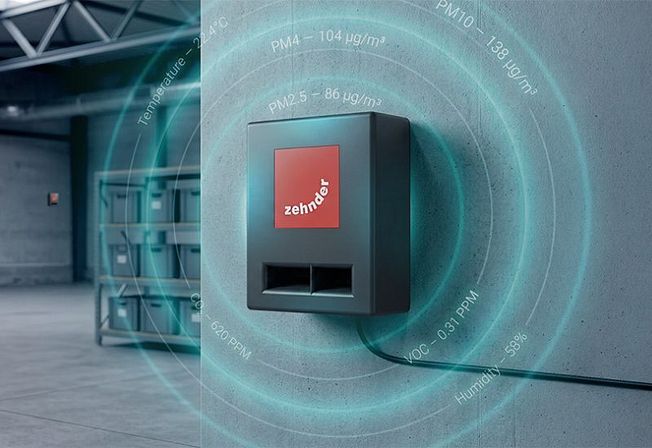
You can’t improve what you can’t see. Air quality monitoring shows where airborne particles are generated and where exposure is highest, giving you the evidence to make informed decisions.


It helps you:

  • Identify airborne particle hotspots across your environment
  • Compare exposure across different areas
  • Understand how different processes affect workplace air quality
  • Validate improvement measures with objective data
  • Make informed operational decisions with measurable evidence

Explore our industrial air quality monitors

Understand the air your people share.

Industrial air quality monitors

Industrial air cleaning protects your people and your operations.

industrial-air-purifiers

Industrial air cleaning protects your people and your operations.

Once you understand your workplace air and true level of exposure, you can take targeted action where it will have the greatest impact.

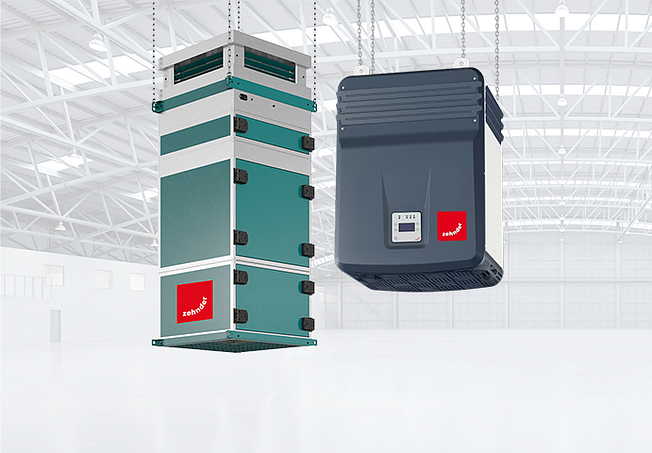
Industrial air cleaning continuously removes welding fumes, grinding dust, finishing dust, oil mist and other airborne particles from the air your people share. The result is a cleaner production environment that supports employee wellbeing, manufacturing quality and more reliable operation.

Discover our industrial air purifiers

What cleaner air makes possible.

To remain competitive, we need to keep getting better and better – and improve our right-first-time rate. Clean air is one of the ways we can do that.

Questions we hear from automotive manufacturers every day.

What creates the biggest air quality challenges in automotive manufacturing?

Every stage of automotive manufacturing contributes to workplace air quality. Welding fumes, grinding dust, oil mist, tyre wear and brake dust are generated throughout production, while daily activity allows airborne particles to spread far beyond the process that created them.

Can welding fumes spread beyond the welding cell?

Yes. Welding fumes contain ultrafine particles that can remain airborne long after welding has finished. Airflow, people and vehicle movement can carry them well beyond the welding cell into surrounding production areas.

Can airborne contamination affect automated production equipment?

Yes. Fine airborne particles can build up inside robots, conveyors, sensors and electrical cabinets, increasing maintenance requirements, reducing reliability and contributing to unplanned downtime.

Why does dust keep returning after cleaning?

Because airborne particles don't stop moving. While cleaning removes settled dust, production processes continue generating new particles and everyday activity resuspends those already on surfaces.

Can airborne contamination affect automotive manufacturing quality?

Yes. Airborne particles can settle on components, assemblies and sensitive production areas. Cleaner air helps maintain cleaner manufacturing conditions and supports more consistent product quality.

How can manufacturers identify airborne contamination hotspots?

Air quality monitoring shows where airborne particles are generated, how they move through your facility and which areas experience the highest exposure. It replaces assumptions with objective data.

Ready to improve air quality across your automotive facility?

Every automotive manufacturing facility is different. That's why every conversation starts with understanding your processes, your people and the air they share. Let's explore how cleaner air can support your production environment.

MCNCUVDDHYDJCHVATRHZEIOHXYYI?oid=00D24000000ef4qEAA&channelId=0ap08000000XZz7AAG
Ben Simons Country ManagerUnited Kingdom
MCNCUVDDHYDJCHVATRHZEIOHXYYI?oid=00D24000000ef4qEAA&channelId=0ap08000000XZz7AAG