Woodworking dust is invisible, but its risks are real. This workshop’s story shows how one simple step can transform your environment.
Step inside a busy woodworking shop and three things will hit you straight away: the rhythm of saws, the smell of freshly cut timber, and the fine layer of dust that seems to cling to every surface. For one customer in the woodworking industry, this dust wasn’t just part of the job, it was a constant source of concern.
Despite investing in extraction and keeping up strict cleaning routines, the air still felt heavy. Tools, benches and even office furniture were coated daily. Staff went home with dust on their clothes and, more worryingly, in their lungs. Something had to change.
The transformation came with one decision: adding a woodworking air filtration system. Within days, the workshop achieved 80% cleaner air – and with it, a safer, fresher, and far more enjoyable atmosphere to work in.
In this article you’ll discover:

This particular workshop combined traditional joinery with modern CNC machines – a mix that creates significant volumes of dust. Even with extraction in place, fine particles escaped and settled everywhere: on benches, machinery, finished products, and even in the office next door.
The Lead Furniture Maker recalls: “My wife used to say I always came home smelling like wood – but now I realise that was fine dust clinging to me. We knew something had to change.”
This is no surprise as the risks of exposure are serious. According to the Canadian Centre for Occupational Health and Safety, wood dust is recognised as a carcinogen. And prolonged exposure has been linked to chronic respiratory issues, asthma, and even nasal cancer. What’s worse is that fine woodworking dust is invisible to the naked eye, meaning workers often underestimate the danger until symptoms appear.
For a deeper dive into exposure risks, we’ve developed a wood dust exposure guide for you to download.
The business had already invested in local exhaust ventilation (LEV). It captured large particles directly at the tool. But even with LEV, fine dust still drifted, circulated, and spread across the workshop, putting people and machinery at risk.
The Lead Furniture Maker explains: “During busy production times, the dust used to hang so heavy you could taste the material being cut.”
LEV is excellent for catching larger, visible particles, but it cannot stop the spread of respirable dust – the microscopic particles that pose the highest health risks when breathing in the sawdust. These particles remain suspended in the air for hours, finding their way into workers’ lungs, clogging machines, and reducing air quality across the entire shop floor.
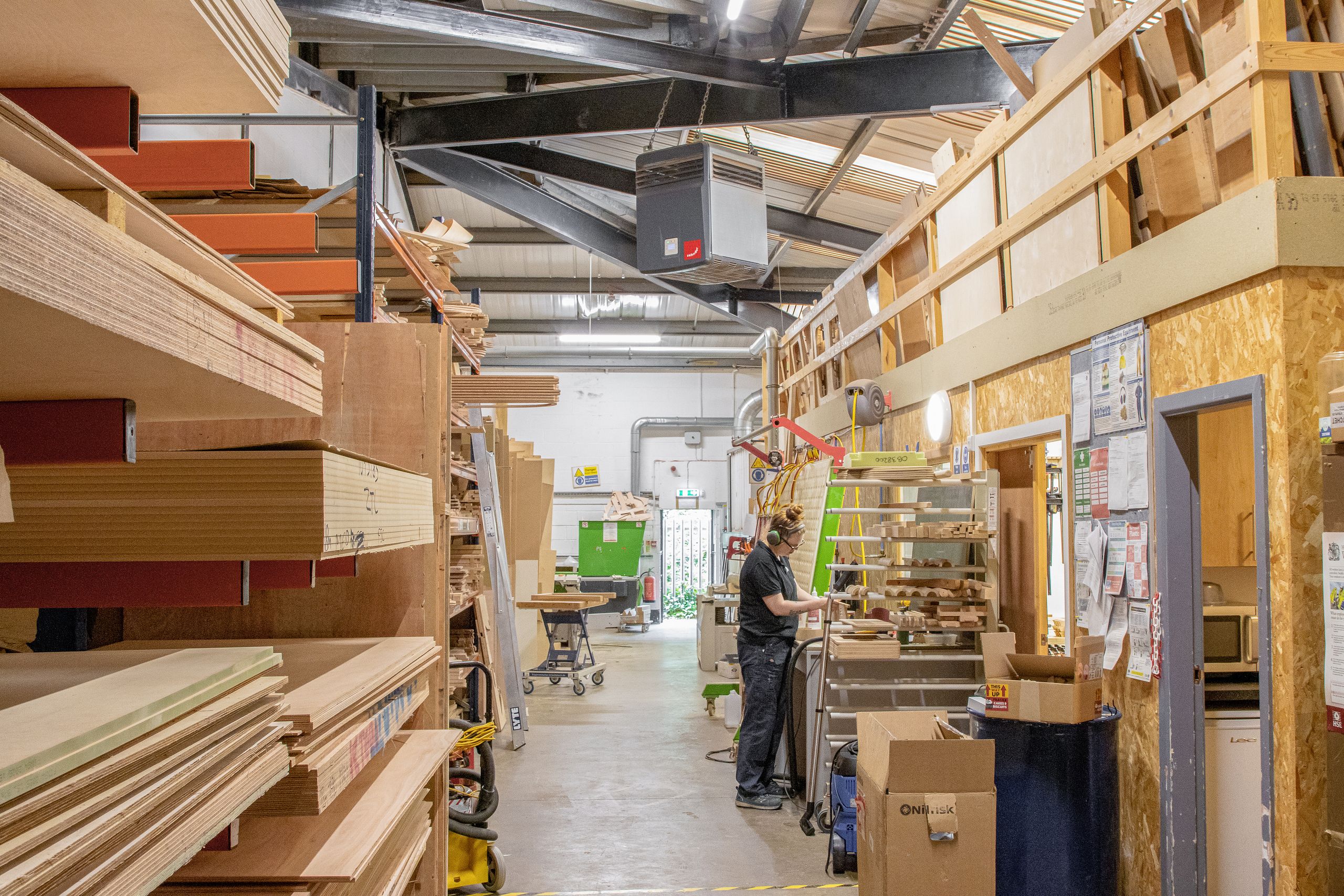
To address what LEV couldn’t, Zehnder Clean Air Solutions installed a woodworking air filtration system that complemented the existing extraction setup. These air cleaning units target fine airborne dust, working across the entire room rather than just at the source of cutting or sanding.
The result is a complete system that protects both production staff and office workers who share the same air.
Independent measurements confirm the difference: Zehnder air purifiers can cut particulate levels (PM2.5) by up to 90% in real environments. This means woodworkers no longer rely solely on extraction, resulting in the whole workshop benefiting from the implementation of air purifiers for wood dust.
The difference was both measurable and visible. Air quality measurements confirmed what the team already sensed: an 80% reduction in airborne woodworking dust.
Surfaces stayed cleaner, air felt lighter and fresher, and the workshop became a healthier, more comfortable place to spend long hours.
“It’s a much nicer environment to work in – and to walk through. Everyone noticed the difference the system made”, explains the Lead Furniture Maker.
The benefits extended beyond health, too. With less dust settling on machinery and floors, the team spent less time cleaning, and more time focusing on their craft.
Wood dust may be part of the job, but it doesn’t need to be part of your lungs. Here are the best practices every woodworking business should follow:
This case proves that woodworking air filtration is not a luxury – it’s essential for long-term health, comfort, and productivity. By working alongside LEV, woodworking air filtration systems capture what extraction leaves behind, delivering both immediate and long-term value.
For woodworking businesses that run large-scale operations, clean air becomes even more critical. Bigger spaces mean more machines, more staff and more dust circulating unnoticed. That’s where our industrial air purifiers come in.
Key benefits of woodworking air filtration:
Up to 90% less airborne woodworking dust, meaning you breathe easier with every shift.
A safer and healthier working environment where your team feels valued and protected.
Reduced cleaning demands: spend less time sweeping and more time focusing on the craft you love.
Employees who feel better day to day, with higher morale, sharper focus and more energy for their work.
Woodworking dust is invisible, but its risks are real. This workshop’s story shows how one simple step can transform your environment.
To complete your subscription to our newsletter, simply click on the link in your inbox. If you don't receive anything, check your spam folder to be sure.
Yes. Even with LEV in place, fine woodworking dust floats through the air and settles everywhere. A dedicated filtration system captures these invisible particles, protecting both shop floor and office staff.
LEV is designed to capture dust directly at the tool, which is effective for larger particles. But respirable dust often escapes into the wider workshop. Air filtration tackles the whole atmosphere of the workshop, ensuring that even the finest dust particles are removed.
Most woodworking air filtration systems are installed in under a day, and the process does not interrupt production. This means cleaner air without downtime for your team.
Yes. These systems capture both the fine particles you cannot see and the visible woodworking dust that settles on machines and floors. As a result, workshops look tidier, surfaces stay cleaner for longer, and cleaning routines become far less demanding.