All articles

Metal dust doesn’t stop at the workstation: Why unprotected workers face hidden exposure

7 min reading time Metal fabrication

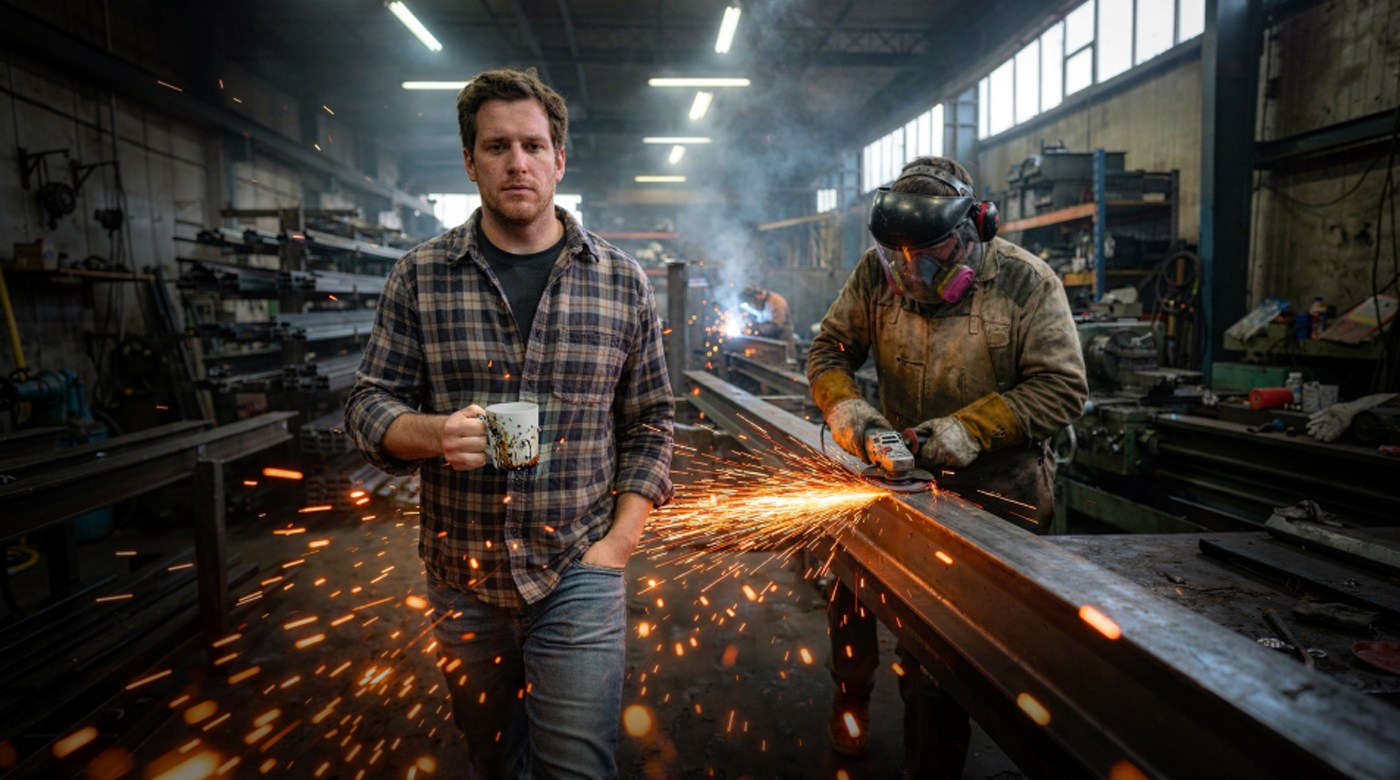
Most people think metal dust is a problem for operators. The ones at the machine. The ones wearing protection.

But the air doesn’t work like that.

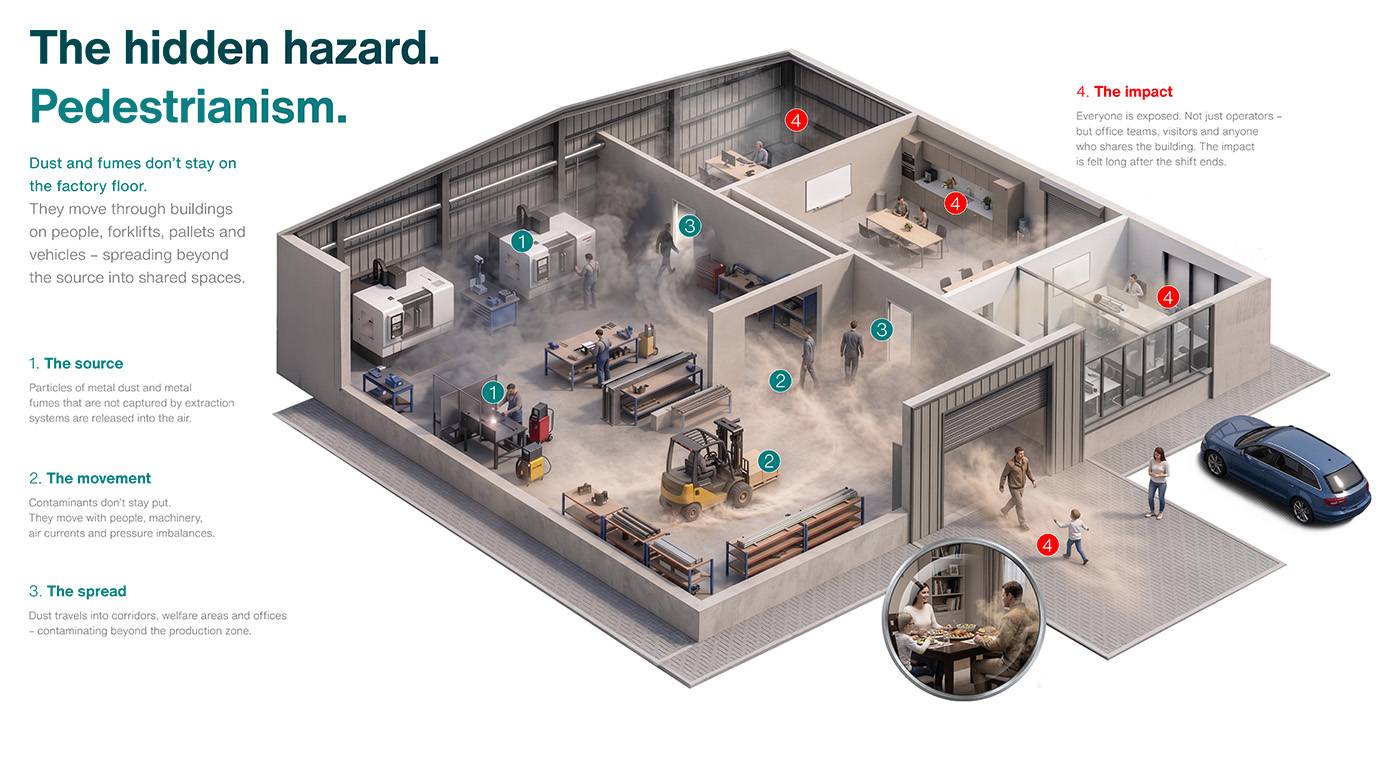
Metal dust, welding fume, and airborne metal particles don’t stay where they are created. They move, through walkways, across departments, into shared spaces where people feel safe.

Exposure doesn’t happen where the work happens. It happens wherever the air goes.

Which means the people who feel safest often don’t realise they’re the most exposed.

This isn’t a future risk. It’s already part of your working environment.

metal dust

What is metal dust?

Metal dust is made up of microscopic particles released when metal is cut, ground, welded, polished, or processed. Alongside it, welding fume and ultra-fine metal particles are created, many too small to ever be seen.

Some particles settle quickly. But many don’t.

They stay suspended in the air for hours, moving with airflow, drifting through open spaces, and circulating through the same environment people work, walk, and breathe in every day.

You might see dust on a surface. But the greater risk is often the dust you never notice.

Because in real environments, metal dust doesn’t stay where it starts.
It becomes part of the air everyone shares.

Metal dust exposure travels far beyond the workstation

Every time metal is cut, ground, or welded, particles are released into the air. And while the process may stop, the exposure doesn’t.

The assumption is that once the task is finished, the risk is contained, that extraction systems and distance from the machine are enough to protect the wider environment.

But airborne metal particles don’t simply disappear. They move. They spread. They linger.

Carried by airflow, machinery, and everyday movement, they travel far beyond the workstation, into walkways, shared spaces, and areas where protection is rarely considered.

What begins as a local process becomes something much harder to see: A shared exposure.

Exposure is no longer defined by the job someone does. It is defined by the air they breathe.

Metal dust and welding fume don’t recognise job roles

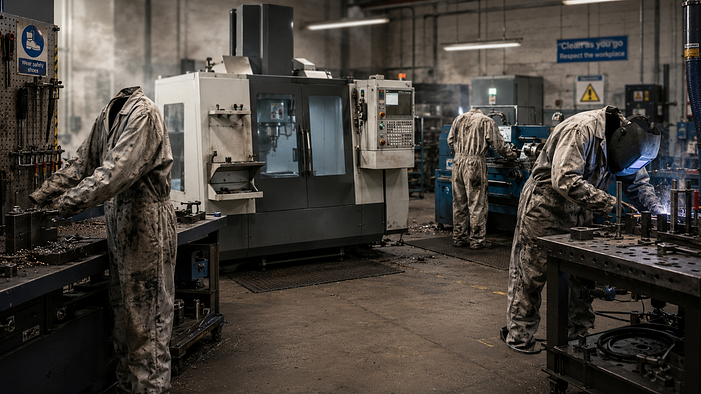
Protection in metalworking is usually organised around visible risk. Operators wear protection. Extraction systems focus on machines. Hazard zones are clearly defined.

But airborne metal particles do not recognise these boundaries.

They move through walkways, inspection stations, maintenance areas, and offices connected to production floors. A supervisor crossing the facility, a technician completing routine checks, or a visitor walking through the space may inhale the same air as the welding station, without the same level of protection.

Exposure is no longer determined by the task someone performs. It is determined by the air they share.

Why metal dust exposure is often misunderstood

Metal dust, welding fume, and airborne metal fume behave differently from most workplace hazards. They are rarely confined to one task or location, and their impact is not always immediately visible.

Once airborne, contaminants move through shared environments, affecting people, spaces, and routines in ways that are easy to overlook.

Understanding metal fume exposure begins by recognising how risk actually develops, across health, airflow, and everyday operations.

Health risks from metal dust and welding fume exposure
  • Respiratory irritation caused by repeated inhalation of airborne metal particles
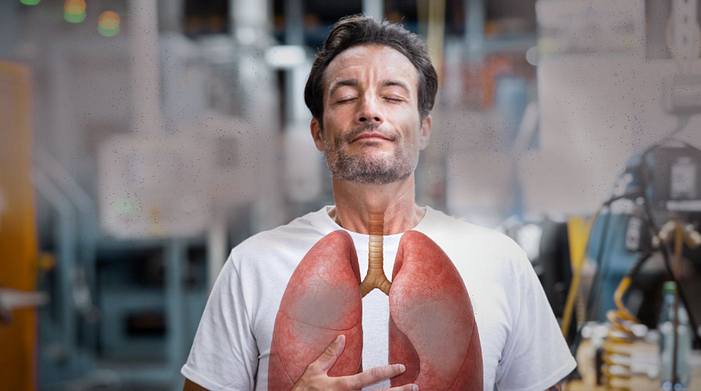
  • Long-term lung health risks associated with prolonged exposure to metal dust and welding fume
  • Allergic reactions and chronic breathing discomfort developing over time
  • Gradual health effects that may remain unnoticed until exposure has accumulated

The impact is rarely immediate. It builds quietly through daily exposure.

Why the least protected workers may face the highest exposure
  • Pedestrian workers and supervisors spend extended time in shared airspaces without respiratory protection
  • Maintenance teams and visitors move between multiple environments during a shift
  • Exposure occurs outside designated hazard zones where protection feels unnecessary
  • Risk depends less on job role and more on the air being shared

People far from the process may still breathe the same contaminants.

Why source extraction cannot capture every airborne metal particle
  • Extraction systems focus on emissions at the point of generation
  • Microscopic particles can escape capture and remain suspended in the air
  • Airflow redistributes residual metal dust beyond workstation boundaries
  • Contaminants continue circulating after processes have stopped

What escapes locally becomes part of the wider environment.

How airborne metal particles spread through shared industrial air
  • Opening doors and pressure changes shift airflow patterns
  • Movement of forklifts and equipment redistributes airborne dust
  • Ventilation systems circulate particles between connected spaces
  • Normal worker movement continuously reshapes air distribution

Metal dust exposure becomes environmental rather than task specific.

The risk is not always visible, but it is continuously present.
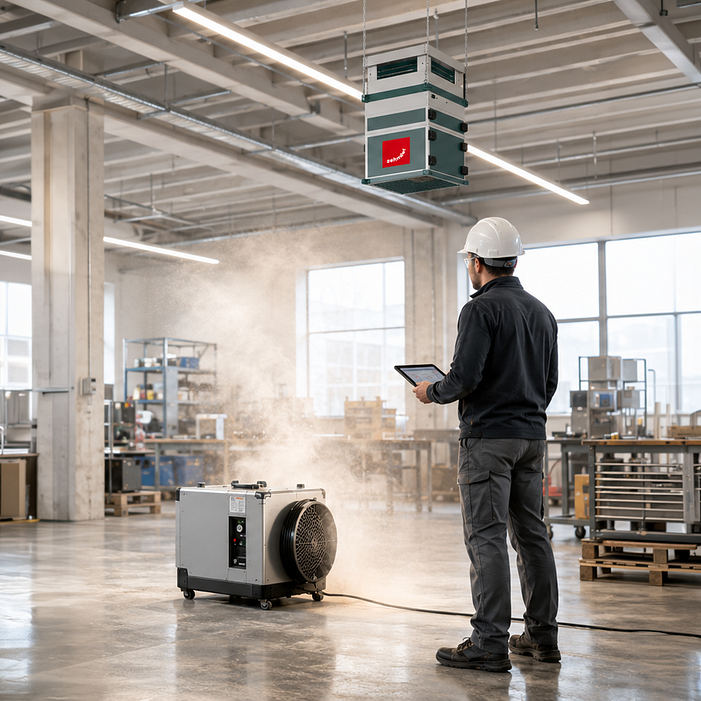
Where metal dust and airborne metal particles often go unnoticed

Common hidden exposure areas

  • Walkways and transport routes connecting departments
  • Assembly and inspection stations near production zones
  • Maintenance and servicing areas
  • Supervisory and observation points overlooking operations
  • Offices connected to manufacturing spaces
  • Entry and transition zones between clean and production areas

These environments often feel safe because dust generation is not visible, yet airborne metal particles frequently accumulate where airflow slows and people spend extended periods.

Metal dust in shared air means shared responsibility

Air connects everyone inside a facility, operators, engineers, office teams, contractors, and visitors alike.

When metal dust exposure is viewed only as a workstation issue, gaps appear in protection. When it is understood as an environmental condition, a clearer picture emerges – clean air supports every role, every movement, and every moment spent inside the space.

Clean air protects not by drawing attention to itself, but by removing uncertainty, allowing people to focus on their work and return home without carrying unseen risks with them.

Seeing metal dust exposure differently

Awareness begins when air is no longer treated as empty space, but as an active part of the workplace environment.

When facilities understand how welding dust, metal fume, and airborne metal particles move through shared air, hidden exposure becomes visible. Decisions become clearer. Protection becomes consistent.

Because the goal is not simply to control dust at a machine.

It is to protect the people who live and work within the air every day.

Is metal dust only dangerous near machinery?

No. Metal dust does not stay at the source, it can travel through your workplace environment, exposing workers far beyond the point of generation.

What is welding fume compared to metal dust?

Welding and metal fume consists of ultra-fine particles formed when metal vaporises during welding. Like metal dust, these particles remain airborne and can spread throughout facilities.

Why can airborne metal particles and metal fume affect pedestrians and office staff?

Air circulates continuously, carrying contaminants into shared spaces where workers may not use respiratory protection.

Can extraction systems eliminate metal dust exposure completely?

Extraction significantly reduces emissions but cannot capture every airborne particle, meaning residual exposure may still occur.

How can facilities better understand airborne exposure risk?

By analysing airflow patterns, monitoring air quality over time, and assessing exposure across the entire environment, not only at individual machines.

Stay informed about the realities of industrial air quality

Receive practical insights, research, and expert perspectives on metal dust, welding fume, and clean air strategies, delivered directly to your inbox

Please fill in all required fields!
Fields marked with * must be filled in. We collect these data in order to correctly enter and process your request in the system. We take the security of your data seriously. You can find our privacy policy here.

To complete your subscription to our newsletter, simply click on the link in your inbox. If you don't receive anything, check your spam folder to be sure.

To our blog articles